

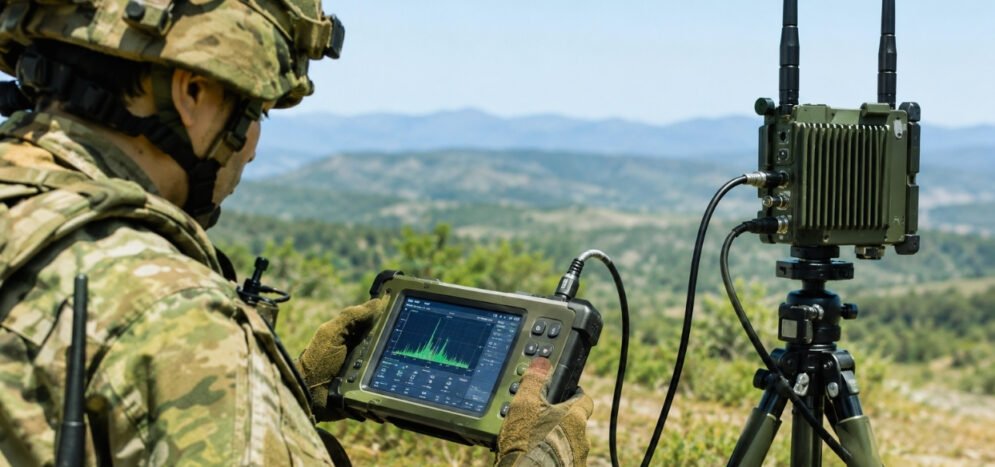
Handheld test systems are compact, portable technologies designed to measure, analyze, diagnose, and verify the performance of electronic, electrical, mechanical, communication, and defense systems outside traditional laboratory environments. These systems combine sensing, signal processing, computing, and display capabilities in lightweight instruments that can be carried directly to the point of testing. Their portability enables engineers, technicians, field-service teams, military personnel, and maintenance crews to perform accurate measurements without transporting equipment to centralized test facilities.
The development of handheld test systems has accelerated alongside advances in miniaturized electronics, wireless communication, embedded computing, batteries, sensors, and software. Modern instruments can perform functions that previously required large benchtop systems, while improved processing power enables real-time analysis and automated diagnostics. As industries increasingly emphasize rapid maintenance, predictive testing, and reduced equipment downtime, handheld test technologies are becoming an important part of field-service and maintenance operations.
Evolution and Importance of Handheld Test Systems
Early portable test equipment primarily focused on basic electrical measurements such as voltage, current, resistance, and continuity. Traditional handheld multimeters established the foundation for portable testing, allowing technicians to troubleshoot electrical systems directly at installation sites. As electronic systems became more complex, portable instruments evolved to support frequency measurements, waveform analysis, communications testing, power quality assessment, thermal inspection, and network diagnostics.
The introduction of microprocessors significantly expanded the capabilities of handheld equipment. Digital displays replaced many analog indicators, while embedded software enabled automated calculations, data storage, calibration functions, and advanced measurement modes. More recently, high-performance processors and compact sensors have allowed handheld instruments to perform sophisticated analysis while maintaining relatively small form factors.
Handheld test systems are particularly important in environments where equipment cannot easily be moved. Aircraft, military vehicles, telecommunications infrastructure, industrial machinery, electrical substations, and remote installations often require on-site diagnostics. Portable test systems allow technicians to identify faults quickly, verify repairs, and reduce equipment downtime.
Another important advantage is accessibility. Field personnel can conduct measurements at remote locations without depending entirely on centralized laboratories. This capability is especially valuable for infrastructure inspection, defense operations, emergency maintenance, utilities, and industrial service applications.
Key Technologies Used in Handheld Test Systems
Modern handheld test systems integrate several technologies to provide accurate measurements within compact devices. High-performance sensors form the foundation of many systems by converting physical parameters into electrical signals that can be processed by embedded electronics. Depending on the application, sensors can measure temperature, pressure, vibration, current, voltage, acceleration, optical signals, radio-frequency energy, or other parameters.
Analog-to-digital converters are another critical technology. They convert analog signals generated by sensors into digital data that processors can analyze. Improvements in converter resolution, sampling rates, and noise performance enable handheld systems to measure increasingly complex signals with greater precision.
Embedded processors provide the computational capability required for real-time analysis. Modern handheld instruments can execute signal-processing algorithms, compare measurements against predefined limits, identify abnormal conditions, and display diagnostic information. Some systems also incorporate field-programmable gate arrays or specialized processing hardware when high-speed signal analysis is required.
Displays have also evolved considerably. Modern handheld systems commonly use high-resolution color screens, touch interfaces, and graphical dashboards. These interfaces allow technicians to view waveforms, trends, measurement values, alarms, and diagnostic results more intuitively than traditional numerical displays.
Battery technology is equally important because portability depends on reliable power. Rechargeable lithium-ion batteries have enabled longer operating periods while reducing the size and weight of portable instruments. Advanced power-management systems can optimize energy consumption by adjusting processor activity, display brightness, and communication functions according to operating conditions.
Wireless connectivity is another major development. Bluetooth, Wi-Fi, cellular connectivity, and other wireless technologies allow handheld test systems to communicate with smartphones, tablets, cloud platforms, and centralized maintenance systems. Technicians can transfer measurements, receive updated test procedures, and share diagnostic information without physically connecting the instrument to another computer.
Major Types and Applications
Handheld test systems cover a broad range of applications. Digital multimeters remain among the most widely used portable instruments for electrical testing. They are used to measure voltage, current, resistance, capacitance, continuity, and other electrical parameters across industrial, commercial, automotive, and consumer applications.
Portable oscilloscopes provide waveform visualization and signal analysis. Their compact form makes them useful for troubleshooting electronic circuits, embedded systems, power supplies, motor controllers, and communication equipment. Some advanced handheld oscilloscopes incorporate multiple channels and sophisticated triggering and measurement functions.
Handheld spectrum analyzers and RF test instruments are increasingly important as wireless technologies expand. These systems can analyze radio-frequency signals, identify interference, measure signal strength, and support the installation and maintenance of wireless networks. Telecommunications engineers use portable RF instruments to evaluate cellular, satellite, radio, and other communication systems.
Thermal imaging systems represent another important category. Handheld thermal cameras detect infrared radiation and convert it into temperature maps. They can help identify overheating electrical connections, defective components, insulation problems, mechanical friction, and other abnormal thermal conditions. In industrial maintenance, thermal inspection can support preventive maintenance by detecting issues before they lead to equipment failure.
Portable vibration analyzers are widely used for machinery condition monitoring. They measure vibration patterns in motors, pumps, compressors, turbines, and rotating equipment. Changes in vibration characteristics can provide indications of imbalance, misalignment, bearing wear, or other mechanical problems.
In aerospace and defense, handheld test systems support maintenance and operational readiness. Portable instruments can be used to test avionics, communication systems, electronic warfare equipment, navigation systems, power systems, and sensors. Their ability to operate in field environments reduces dependence on large test facilities and enables technicians to perform diagnostics closer to deployed equipment.
Technological Advancements Driving Development
Artificial intelligence and machine learning are beginning to influence the capabilities of handheld testing equipment. Algorithms can analyze large volumes of measurement data and identify patterns associated with known faults. Instead of simply displaying raw measurements, future systems are expected to provide more automated diagnostic assistance and recommend potential causes of abnormal readings.
Cloud connectivity is also changing how test data is managed. Measurements collected in the field can be synchronized with centralized databases, enabling organizations to create equipment histories and monitor recurring faults. When integrated with asset-management platforms, handheld instruments can become part of broader predictive-maintenance programs.
Augmented reality may further improve field testing by displaying instructions, component information, or diagnostic guidance within a technician’s field of view. Combined with handheld sensors, AR-enabled workflows could help personnel follow complex maintenance procedures while reducing dependence on printed documentation.
Miniaturized sensors and improved semiconductor technologies are simultaneously reducing instrument size while increasing functionality. Multi-function devices can increasingly replace several individual instruments, reducing the amount of equipment technicians need to carry.
Cybersecurity is becoming increasingly important as connected handheld instruments exchange data with enterprise networks and cloud platforms. Secure authentication, encrypted communication, software updates, and access controls will become essential features as testing equipment becomes more digitally integrated.
Future Outlook
The future of handheld test systems will be shaped by the convergence of portable hardware, advanced sensing, embedded computing, wireless connectivity, artificial intelligence, and cloud-based analytics. Equipment is expected to become smaller, more multifunctional, and easier to operate while delivering increasingly sophisticated diagnostic capabilities.
Industries with complex assets will continue to require rapid and reliable field testing to reduce downtime and improve maintenance efficiency. Aerospace, defense, telecommunications, automotive, energy, electronics manufacturing, and industrial automation are likely to remain important application areas.
The transition from simple measurement instruments toward intelligent diagnostic platforms represents a major evolution in handheld testing. Instead of merely collecting measurements, future systems will increasingly interpret data, recognize abnormal conditions, communicate results, and integrate with maintenance-management ecosystems.
As sensor accuracy, battery performance, processing power, connectivity, and software capabilities continue to improve, handheld test systems will play a growing role in decentralized testing and condition monitoring. Their combination of portability and advanced analytical capabilities positions them as an important technology for industries seeking faster troubleshooting, reduced maintenance costs, improved asset reliability, and greater operational efficiency.