
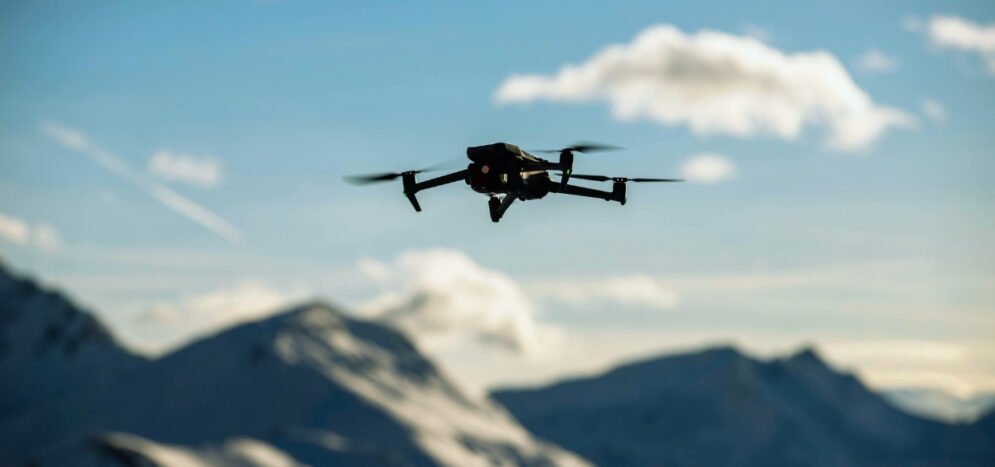
Small UAV Technology have become an important part of the rapidly evolving aerospace and defence industry. Designed to operate without an onboard pilot, these compact aerial platforms offer flexibility, mobility and cost-effective capabilities across military, commercial and civilian applications. Their relatively small size, lower operating costs and ability to access difficult-to-reach locations make them valuable for missions that may be challenging or expensive to conduct using conventional aircraft.
Small UAV technology includes a combination of lightweight airframes, propulsion systems, navigation equipment, communication links, sensors and onboard processing capabilities. Depending on their configuration, these platforms can support intelligence, surveillance and reconnaissance (ISR), infrastructure inspection, mapping, agricultural monitoring, emergency response and logistics.
In the defence sector, small UAVs are increasingly being integrated into military operations to improve situational awareness, support tactical decision-making and reduce the exposure of personnel to operational risks. Continuous advances in miniaturisation, artificial intelligence (AI), battery performance and autonomous navigation are further expanding their capabilities.
Evolution and Technological Development of Small UAVs
The development of small UAVs has progressed from relatively basic remotely controlled aircraft to sophisticated platforms equipped with autonomous flight capabilities and advanced onboard sensors. Early systems were primarily used for limited surveillance and experimental applications, with operators relying heavily on direct control and relatively simple navigation technologies.
Advancements in microelectronics, satellite navigation, lightweight composite materials and digital communication systems have significantly improved their performance. Modern small UAVs can maintain stable flight, follow programmed routes, process sensor information and transmit operational data to ground stations.
The introduction of compact electro-optical and infrared sensors has expanded their usefulness in low-visibility and challenging environments. Meanwhile, improvements in battery technology and electric propulsion have supported quieter operation and greater endurance in selected platforms.
Today, small UAV development increasingly focuses on autonomy, interoperability and multi-mission capabilities. Manufacturers are designing adaptable platforms that can accommodate different payloads and operate alongside broader command, control and intelligence networks.
Key Technologies and Applications of Small UAVs
Modern small UAV technology relies on the integration of several systems that determine flight performance, operational reliability and mission effectiveness. Lightweight airframes, including composite structures, help reduce overall weight while maintaining structural strength. Electric motors and compact propulsion systems provide efficient operation, particularly for short-range platforms.
Navigation and flight-control systems use combinations of satellite positioning, inertial measurement units, onboard sensors and software-based stabilisation to maintain flight accuracy. Communication links enable operators to monitor the aircraft, receive sensor data and transmit commands. Secure and resilient communications are particularly important in defence applications, where electronic interference and signal disruption can affect mission continuity.
Payload integration is another major development area. Small UAVs can carry cameras, thermal imaging equipment, environmental sensors and other compact mission systems. In military applications, these technologies support battlefield observation, reconnaissance, border monitoring and tactical intelligence gathering. Selected platforms are also being developed for specialised missions involving electronic warfare support and other military roles.
Beyond defence, small UAVs are increasingly used for agricultural surveys, construction monitoring, power-line inspection, disaster assessment, environmental research and aerial mapping. Their ability to collect information quickly and operate in restricted or hazardous locations makes them valuable tools across multiple industries.
Technological Advancements Driving Market Growth
Artificial intelligence and machine learning are becoming important drivers of innovation in small UAV technology. AI-enabled systems can support automated object recognition, image analysis, navigation assistance and flight-path optimisation. These capabilities can reduce operator workload and improve the speed at which collected information is interpreted.
Autonomous navigation is also advancing. Modern platforms increasingly incorporate obstacle-detection sensors, computer vision and onboard processing to support operations in complex environments. However, the level of autonomy varies significantly across platforms, and many systems continue to require human supervision.
Another important development is the integration of small UAVs with networked defence systems. Data-sharing capabilities allow information collected by airborne platforms to be distributed to ground units and command centres, improving situational awareness. Advances in communication security, electronic protection and alternative navigation methods are also receiving attention as military forces address vulnerabilities associated with signal disruption.
Battery development, energy-efficient electronics and lightweight materials are further supporting improvements in endurance and payload capacity. These technologies are helping manufacturers develop more capable platforms without significantly increasing size or operating costs.
Growing Demand Across Defence and Commercial Sectors
The demand for small UAVs is increasing as defence organisations and commercial operators seek flexible, cost-effective aerial capabilities. Military modernisation programmes are placing greater emphasis on tactical drones that can provide real-time information, support reconnaissance and improve operational awareness at the unit level.
Recent conflicts have also highlighted the growing role of small drones in modern warfare. Their relatively low acquisition costs and adaptability have encouraged military forces to examine new operational concepts, strengthen counter-UAV capabilities and invest in systems that can operate in electronically contested environments.
Commercial demand is expanding alongside defence applications. Agriculture companies use UAVs for crop monitoring and field assessment, while infrastructure operators deploy them to inspect bridges, pipelines, transmission lines and industrial facilities. Emergency services can use aerial platforms to assess disaster-affected areas and identify potential hazards.
As a result, small UAV technology is developing into a broad industrial segment supported by demand from defence agencies, government organisations and private-sector users.
Regional Developments and Competitive Landscape
North America remains an important centre for small UAV innovation, supported by defence research, established aerospace manufacturers and investments in autonomous systems. The United States continues to explore compact UAVs for tactical surveillance, intelligence gathering and distributed military operations.
Europe is strengthening its drone manufacturing and research capabilities through defence programmes, industrial partnerships and investments in autonomous aviation. Regional security requirements are also encouraging the development of interoperable UAV platforms and counter-drone technologies.
Asia-Pacific is emerging as a significant growth region, driven by defence modernisation and expanding commercial applications. Countries such as China, India, Japan and South Korea are investing in domestic drone manufacturing, sensor technologies and autonomous systems. In India, government initiatives supporting indigenous defence production and drone manufacturing are creating opportunities for domestic companies and technology developers.
The competitive landscape includes established aerospace and defence companies as well as specialised drone manufacturers and emerging technology firms. Major participants include DJI, AeroVironment, Teledyne FLIR, Parrot and other regional developers. Competition is increasingly shaped by flight endurance, sensor quality, autonomy, cybersecurity, payload flexibility and manufacturing scalability.
Challenges and Future Outlook
Despite significant technological progress, small UAV development faces several challenges. Limited battery capacity continues to restrict endurance for many electric platforms, while payload constraints can affect the integration of advanced sensors and mission equipment. Communication vulnerabilities, electronic interference and cybersecurity threats also remain important concerns, particularly in defence operations.
Regulatory restrictions involving airspace access, flight safety, privacy and cross-border operations can limit commercial deployment. Manufacturers must also address supply-chain dependencies involving batteries, semiconductors, sensors and other specialised components. In the defence sector, ensuring reliable performance under demanding environmental and operational conditions remains essential.
Looking ahead, small UAV technology is expected to advance through greater autonomy, improved energy efficiency, advanced sensing and stronger integration with digital command networks. Developments in AI, onboard computing, secure communications and collaborative unmanned operations could expand their role across defence and commercial sectors.
As military forces increasingly adopt distributed and network-centric operating concepts, small UAVs are likely to become an important element of future battlefield capabilities. At the same time, expanding commercial applications will create opportunities for manufacturers offering reliable, adaptable and cost-effective platforms.
Overall, small UAV technology is transforming how organisations collect information, monitor assets and conduct operations. Continued investment in innovation, indigenous manufacturing and operational integration will play a major role in shaping the industry’s long-term growth.