

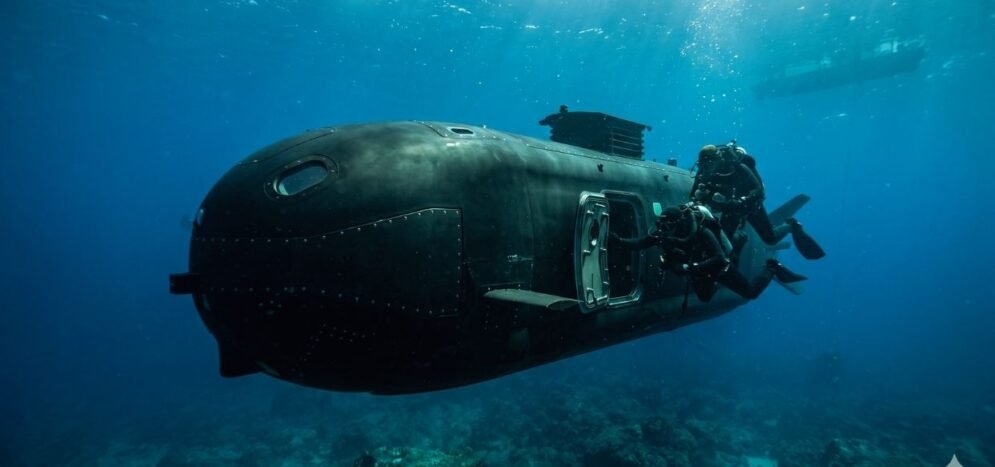
Combat Submersible Vehicles Market: The Future of Underwater Defense Mobility
The global combat submersible vehicles market is entering a transformative phase as modern naval forces increasingly prioritize stealth, underwater surveillance, and autonomous maritime warfare capabilities. Combat submersible vehicles, including crewed mini-submarines, autonomous underwater vehicles, remotely operated systems, and hybrid underwater platforms, are becoming critical assets for modern defense strategies. Nations across the world are investing heavily in underwater combat technologies to strengthen maritime security, protect underwater infrastructure, and expand strategic dominance in contested waters.
Rising Importance of Underwater Warfare
Naval warfare is shifting rapidly toward underwater operations. Traditional surface fleets are no longer sufficient for maintaining maritime superiority in regions facing geopolitical tension and contested sea routes. Combat submersible vehicles offer stealth, flexibility, and reduced detection risk, making them ideal for intelligence gathering, special operations, mine countermeasures, anti-submarine warfare, and seabed monitoring.
Military organizations are increasingly adopting underwater drones and autonomous submersibles because these platforms can operate in dangerous environments without risking human lives. Modern underwater vehicles are capable of remaining submerged for long durations while carrying advanced sensors, sonar systems, and surveillance payloads. This operational flexibility is significantly expanding their role across naval missions.
Technological Advancements Driving Market Growth
Rapid technological innovation is one of the strongest drivers of the combat submersible vehicles market. Advancements in artificial intelligence, autonomous navigation, underwater communication systems, battery technology, and acoustic stealth are enhancing the operational effectiveness of underwater platforms.
Autonomous underwater vehicles are becoming increasingly sophisticated due to the integration of machine learning and intelligent navigation systems. These vehicles can independently perform reconnaissance, target detection, seabed mapping, and underwater surveillance with minimal operator intervention. AI-driven systems are also improving real-time decision-making and mission adaptability in complex underwater environments.
Battery innovation is another major factor shaping the industry. Modern lithium-based energy systems are extending mission endurance, enabling underwater platforms to travel longer distances while supporting advanced payloads and sensors. Enhanced propulsion systems are also improving underwater maneuverability and reducing acoustic signatures, making these platforms harder to detect.
Growing Demand for Autonomous Underwater Vehicles
Autonomous underwater vehicles are emerging as the dominant segment within the combat submersible vehicles market. Unlike remotely operated systems, autonomous platforms can function independently without continuous human control. Their ability to operate in denied or hostile environments has made them increasingly valuable for military missions.
Naval forces are deploying autonomous systems for surveillance, underwater reconnaissance, anti-mine operations, and intelligence collection. The growing focus on distributed maritime operations and unmanned naval warfare is accelerating procurement programs worldwide. Countries are increasingly seeking underwater systems that can operate as force multipliers while reducing operational costs compared to traditional submarines.
The shift toward autonomous underwater warfare is also encouraging partnerships between defense manufacturers, naval agencies, and technology firms. Companies are developing modular platforms capable of carrying different payloads depending on mission requirements, which significantly enhances operational versatility.
Strategic Importance of Seabed Security
The protection of underwater infrastructure is becoming a major defense priority globally. Undersea cables, offshore energy pipelines, and maritime communication systems are critical to economic and national security. Growing concerns about sabotage, espionage, and underwater attacks are pushing governments to strengthen underwater surveillance capabilities.
Combat submersible vehicles are increasingly used for monitoring underwater infrastructure and detecting suspicious activities beneath the ocean surface. These platforms provide persistent underwater surveillance while supporting rapid-response missions in vulnerable maritime regions. Governments are now integrating underwater drones and submersibles into broader naval defense ecosystems to improve maritime situational awareness.
Expanding Defense Budgets Supporting Market Expansion
Rising global defense spending is contributing significantly to market growth. Many countries are modernizing naval fleets and investing in advanced maritime warfare systems to address evolving underwater threats. Strategic competition in regions such as the Indo-Pacific, Arctic waters, and disputed maritime territories is accelerating procurement of underwater combat platforms.
Defense agencies are focusing on technologies that improve operational flexibility while minimizing risk to personnel. Combat submersible vehicles align closely with these objectives because they can perform high-risk underwater missions with enhanced stealth and reduced operational costs. The growing emphasis on asymmetric warfare and unmanned military systems is expected to sustain long-term demand for underwater combat platforms.
Regional Market Dynamics
North America remains a major market for combat submersible vehicles due to extensive naval modernization programs and strong investments in underwater warfare technologies. The United States Navy is actively testing and deploying advanced unmanned underwater systems to strengthen operational capabilities across strategic maritime zones.
The Asia-Pacific region is witnessing rapid market expansion as regional tensions and maritime disputes continue to intensify. Countries such as India, Australia, China, Japan, and South Korea are increasing investments in underwater surveillance and autonomous naval systems. Australia’s development of advanced underwater drones highlights the region’s growing focus on next-generation maritime warfare.
Europe is also strengthening its underwater defense capabilities, particularly in response to concerns surrounding seabed infrastructure security and underwater surveillance. European defense firms are expanding investments in autonomous underwater technologies and integrated naval systems.
Competitive Landscape
The combat submersible vehicles market features strong competition among established defense manufacturers, underwater robotics companies, and emerging technology startups. Major industry participants are focusing on innovation, strategic collaborations, and autonomous systems development to maintain competitive advantages.
Companies are prioritizing modular designs, AI-enabled navigation, advanced sonar integration, and long-endurance underwater operations. The increasing adoption of autonomous platforms is also encouraging defense firms to expand research into swarm technologies and networked underwater systems capable of coordinated missions.
Emerging startups are contributing significantly to innovation within the sector. In India, underwater robotics companies are increasingly collaborating with naval agencies to develop indigenous unmanned underwater systems for defense applications.
Challenges Facing the Industry
Despite strong growth prospects, the market faces several challenges. High development costs, complex underwater communication requirements, cybersecurity vulnerabilities, and operational limitations in harsh underwater environments remain key concerns. Autonomous underwater systems must also overcome navigation difficulties in deep-sea conditions where GPS signals are unavailable.
Regulatory constraints and export restrictions on advanced military technologies may also affect international collaborations and procurement activities. Additionally, maintaining stealth while integrating advanced sensors and communication systems remains a significant engineering challenge for manufacturers.
Future Outlook
The future of the combat submersible vehicles market appears highly promising as underwater warfare becomes an increasingly important component of global defense strategy. Autonomous technologies, artificial intelligence, advanced propulsion systems, and underwater networking capabilities will continue reshaping naval operations.
Military organizations are expected to expand investments in underwater combat systems capable of supporting surveillance, reconnaissance, infrastructure protection, and strategic deterrence missions. As geopolitical competition intensifies across maritime regions, combat submersible vehicles will play a vital role in enhancing naval dominance and securing underwater operational superiority.