
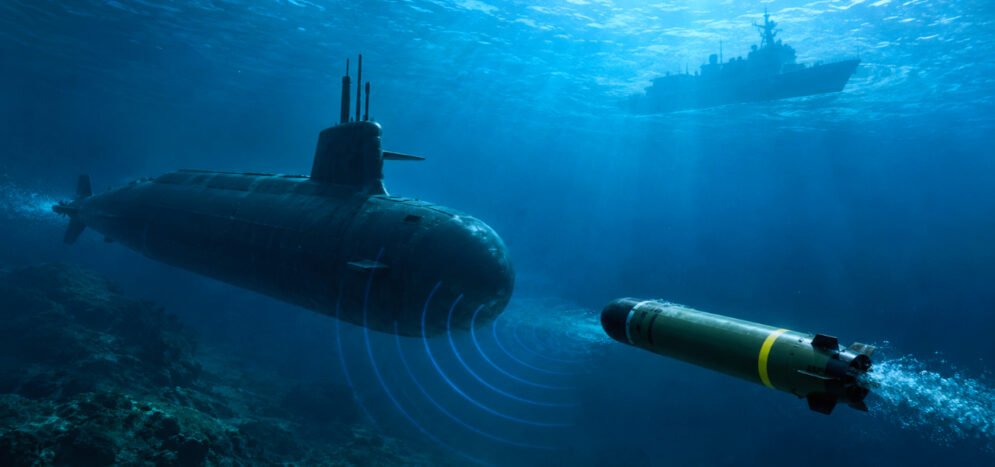
Underwater warfare technology is becoming an increasingly important component of modern naval defense, transforming how nations protect maritime borders, monitor underwater environments, and conduct naval operations. As geopolitical competition intensifies across strategic waterways, oceans, and coastal regions, naval forces are investing in advanced submarines, unmanned underwater vehicles, underwater surveillance systems, and sophisticated acoustic technologies. These innovations are helping defense organizations strengthen maritime situational awareness, improve operational efficiency, and respond to emerging underwater threats.
Modern underwater warfare extends beyond traditional submarine operations. It includes anti-submarine warfare, mine countermeasures, underwater communication, seabed surveillance, and the protection of critical maritime infrastructure. With advances in artificial intelligence (AI), autonomous systems, advanced sensors, and data analytics, underwater warfare technology is evolving toward more connected, persistent, and adaptable naval capabilities.
What Is Underwater Warfare Technology?
Underwater warfare technology refers to the systems, platforms, sensors, and equipment used by naval forces to conduct military operations beneath the ocean’s surface. These technologies support submarine missions, detect underwater threats, protect naval assets, and help maintain maritime security.
Submarines remain a central element of underwater warfare because they can operate discreetly beneath the surface for extended periods. Modern conventional and nuclear-powered submarines incorporate advanced sonar systems, navigation equipment, communication technologies, and integrated combat management systems. Depending on their configuration, they may support intelligence gathering, maritime deterrence, surveillance, and other naval missions.
Underwater warfare also includes unmanned underwater vehicles (UUVs), autonomous underwater vehicles (AUVs), remotely operated vehicles (ROVs), underwater acoustic sensors, and mine detection systems. These technologies enable naval forces to examine challenging underwater environments while reducing the need to expose personnel to hazardous conditions.
As naval operations become more technology-driven, underwater warfare systems are increasingly integrated with surface ships, maritime patrol aircraft, helicopters, satellites, and command-and-control networks. This integration helps create a broader maritime operational picture.
Key Technologies Transforming Underwater Warfare
Advanced sonar and acoustic surveillance systems are essential for detecting, classifying, and tracking underwater objects. Sonar technology uses sound waves to gather information about the underwater environment, where visibility is often limited and conventional radio-frequency communication is restricted. Active sonar transmits sound signals and analyses their reflections, while passive sonar listens for sounds produced by other objects. Modern processing systems help operators interpret acoustic information and distinguish potential threats from background noise.
Unmanned underwater vehicles are expanding the range of naval missions that can be performed without placing crews directly in challenging underwater environments. AUVs can follow programmed routes and collect information using onboard sensors, while ROVs are generally operated remotely through a communication link. Their applications include seabed mapping, underwater infrastructure inspection, mine countermeasures, environmental monitoring, and intelligence support. Improvements in autonomy, battery technology, navigation, and sensor integration are increasing their operational value.
Artificial intelligence and machine learning are becoming increasingly relevant to underwater surveillance and naval decision support. AI-enabled systems can help process large volumes of acoustic data, identify patterns, support object classification, and reduce the workload associated with repetitive monitoring tasks. However, underwater environments are complex, and system performance can be affected by noise, changing water conditions, incomplete data, and unexpected objects. Human oversight and reliable validation remain important for operational decisions.
Underwater communication systems address one of the most persistent challenges in naval operations. Radio waves do not travel effectively through seawater over typical operational distances, making underwater communication more difficult than communication in the air. Acoustic communication can support data exchange over suitable distances, while optical and electromagnetic methods may serve specialised short-range applications. Advances in communication protocols and underwater networking are helping improve coordination between submerged platforms and other naval assets.
Advanced propulsion and energy systems are also shaping underwater warfare capabilities. Submarines and unmanned underwater platforms require reliable energy sources to support endurance, mobility, and onboard equipment. Air-independent propulsion (AIP) can extend the submerged endurance of certain conventional submarines without requiring them to surface as frequently to obtain atmospheric oxygen. Improvements in battery technology, energy management, and propulsion efficiency are also supporting the development of more capable underwater vehicles.
Applications in Modern Naval Defense
Underwater warfare technology supports several essential naval defense functions. One of the most important is anti-submarine warfare (ASW), which involves detecting, tracking, and responding to potential submarine threats. ASW operations may combine shipborne sonar, towed acoustic arrays, maritime patrol aircraft, helicopters, sonobuoys, and underwater sensor networks. Coordinating these systems helps naval forces improve maritime awareness across large operating areas.
Mine countermeasures represent another major application. Naval mines can threaten ports, shipping routes, naval bases, and coastal infrastructure. Unmanned underwater vehicles and specialised mine detection systems can survey underwater areas and help identify potential hazards. These capabilities can reduce the need to expose personnel to dangerous conditions and support safer access to important maritime routes.
Seabed surveillance and infrastructure protection are becoming increasingly significant as countries depend on undersea communication cables, energy pipelines, and offshore installations. Underwater monitoring technologies can support inspections, detect unusual activity, and help authorities assess potential risks to critical infrastructure. Their role is particularly important in areas where maritime security and economic activity overlap.
Underwater technologies also contribute to intelligence, surveillance, and reconnaissance. Submarines, autonomous platforms, and acoustic sensors can collect information about maritime activity and underwater conditions. When integrated with broader naval intelligence networks, this information can support operational planning and improve situational awareness.
For countries with extensive coastlines and strategically important maritime interests, these capabilities can strengthen naval preparedness and help protect economic and security priorities.
Challenges in Underwater Warfare Technology
Despite rapid technological progress, underwater warfare presents significant engineering and operational challenges. Seawater creates a demanding environment for sensors, electronics, propulsion systems, and structural materials. Pressure increases with depth, corrosion can affect equipment, and temperature variations may influence system performance.
Acoustic propagation is another major challenge. Sound behaves differently depending on water temperature, salinity, depth, ocean currents, and the structure of the surrounding seabed. Background noise from ships, marine life, and environmental conditions can complicate detection and classification. Consequently, underwater surveillance systems require extensive testing and careful interpretation of sensor data.
Communication limitations also affect the coordination of submerged platforms. Acoustic links typically provide lower data rates and higher latency than many radio-based systems. This can limit real-time information exchange and make autonomous decision-making more important for certain missions.
Cost, maintenance, cybersecurity, and interoperability are additional considerations. Advanced submarines and specialised underwater systems require significant investment, skilled personnel, and long-term maintenance support. Integrating equipment from different manufacturers can also be difficult when systems use incompatible standards or data formats.
Furthermore, autonomous underwater platforms require robust safety controls, dependable navigation, and appropriate human supervision. Reliable operation in complex environments remains a key priority for defense technology developers.
Future Trends in Underwater Warfare
The future of underwater warfare technology will likely be shaped by greater autonomy, improved sensing, advanced materials, and more integrated maritime networks. AI-assisted acoustic analysis and sensor fusion may help naval forces interpret underwater information more efficiently. At the same time, improvements in batteries, energy storage, and propulsion could extend the operating endurance of unmanned underwater vehicles.
Distributed underwater sensor networks may provide more persistent monitoring of selected maritime areas. When combined with surface platforms, maritime patrol aircraft, and command systems, these networks could contribute to a more comprehensive maritime security picture. Advances in underwater navigation may also improve the reliability of autonomous platforms in environments where satellite navigation signals are unavailable.
Research into corrosion-resistant materials, compact sensors, and modular vehicle architectures could improve equipment durability and simplify maintenance. Digital simulation and advanced testing methods may further support the development of underwater platforms by allowing engineers to evaluate performance under different environmental conditions.
International competition, protection of undersea infrastructure, and the growing importance of maritime security are likely to sustain investment in these technologies. However, future capabilities will depend not only on technological breakthroughs but also on affordability, operational reliability, workforce expertise, and responsible integration into naval command structures.
Conclusion
Underwater warfare technology is reshaping modern naval defense by improving submarine capabilities, underwater surveillance, mine countermeasures, and maritime infrastructure protection. Advanced sonar, unmanned underwater vehicles, AI-assisted analysis, specialised communication systems, and next-generation propulsion are expanding the capabilities available to naval forces.
Although challenging operating conditions, high development costs, and communication limitations remain important obstacles, continued research and engineering innovation are creating new opportunities for underwater operations. As maritime security becomes increasingly dependent on protecting both ocean environments and critical seabed infrastructure, underwater warfare technology will remain a significant area of investment for naval forces and the global defense industry.