

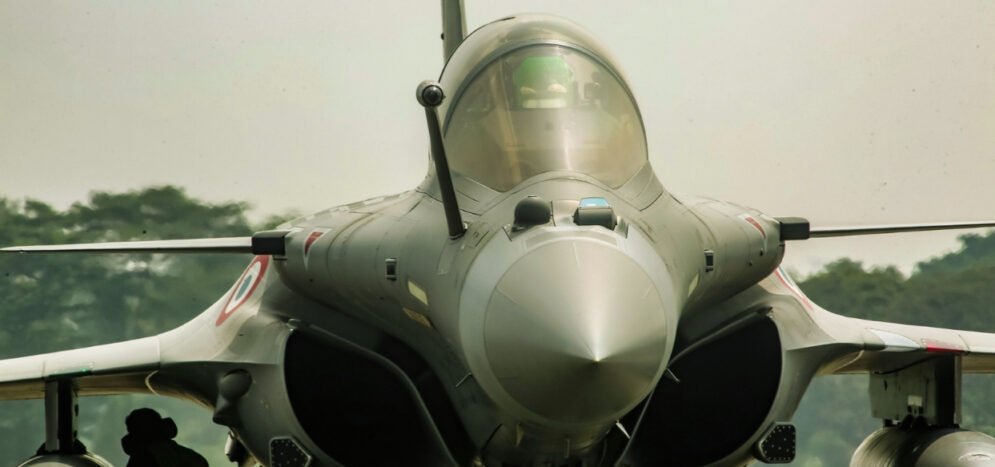
Fighter Aircraft IRST Technology represents modern air combat. It is shaped by sensors, stealth, EW, and beyond-visual-range engagement capabilities. As air forces seek to improve aircraft survivability and situational awareness, traditional radar systems are being complemented by sophisticated passive detection technologies. One of the most important developments in this field is Infrared Search and Track (IRST) technology, which enables fighter aircraft to detect and track potential airborne threats by analysing infrared radiation.

Unlike conventional radar, which transmits electromagnetic signals and receives their reflections, IRST systems passively observe infrared energy associated with aircraft engines, exhaust plumes, and other thermal characteristics. This allows pilots to monitor the surrounding airspace without relying on active radar emissions for initial detection.
The growing emphasis on low-observable aircraft, contested electromagnetic environments, and advanced electronic warfare has increased interest in passive infrared sensing. Integrated into modern fighter aircraft, IRST systems complement radar, electronic support measures, and other onboard sensors to provide a more comprehensive understanding of the operational environment. Consequently, IRST technology is becoming an increasingly important component of modern and next-generation combat aircraft.
Understanding How Fighter Aircraft IRST Technology Works
Fighter aircraft IRST technology uses specialised infrared detectors and optical systems to identify thermal signatures associated with airborne objects. These sensors capture infrared radiation and convert it into electronic signals that onboard computers process to detect potential targets and monitor their movement.
A typical IRST system consists of infrared detectors, optical assemblies, signal-processing software, target-tracking algorithms, and thermal management components. Depending on the design, advanced systems may also incorporate image-processing capabilities that help distinguish aircraft from clouds, terrain, and other sources of background interference.
Once a potential target is detected, the system analyses its infrared signature and movement to maintain a track. The resulting information can be presented to the pilot or combined with data from other onboard sensors to improve target awareness.
One important distinction is that IRST does not automatically provide the same measurements as radar. Passive infrared systems can estimate a target’s angular position and track its motion, but determining accurate distance may require specialised ranging techniques, multiple observations, or information from other sensors.
Modern IRST systems are designed to operate alongside other aircraft technologies rather than replace them. By combining passive infrared observations with radar and electronic surveillance information, fighter aircraft can develop a stronger tactical picture while managing their electromagnetic emissions.
Importance of IRST in Stealth Detection and Air Combat
One of the primary advantages of IRST technology is its ability to detect potential threats without transmitting radar signals. In contested airspace, active radar emissions can provide adversaries with opportunities to detect, classify, or locate the emitting aircraft. Passive infrared sensing offers an alternative approach that can help reduce the aircraft’s electromagnetic signature during surveillance operations.
IRST is particularly relevant to engagements involving stealth aircraft. Low-observable designs are intended to reduce radar detectability, but they cannot completely eliminate heat generated by engines, exhaust systems, aerodynamic friction, and other aircraft components. These thermal characteristics may provide detectable infrared signatures under suitable environmental and operational conditions.
However, infrared detection does not guarantee that a stealth aircraft will be detected at a particular distance or tracked accurately enough for weapon engagement. Performance depends on atmospheric conditions, sensor sensitivity, target aspect, background temperature, and the aircraft’s infrared signature.
IRST also offers benefits in environments affected by electronic jamming. Because passive infrared sensors do not depend on reflected radar signals, their detection function is not directly disrupted by conventional radio-frequency radar jamming. Nevertheless, infrared sensors remain vulnerable to environmental interference, background clutter, and other limitations.
By supplementing radar, IRST can improve situational awareness, support target identification, and contribute to the information needed for beyond-visual-range engagements. The US Navy, for example, declared initial operational capability for the F/A-18E/F Super Hornet’s IRST Block II system in November 2024, announcing the milestone publicly on February 4, 2025. The system was developed to improve airborne target detection and tracking, particularly in challenging electronic warfare environments.
Key Technological Advancements Driving IRST Development
Advances in infrared detector materials, optical engineering, computing power, and sensor fusion are expanding the capabilities of modern IRST systems.
Advanced infrared detectors: Improvements in detector technology enable sensitive measurements of infrared radiation across specific wavelength bands. Technologies such as indium antimonide and mercury cadmium telluride are used in different infrared sensing applications, depending on operational requirements and system architecture.
Enhanced signal processing: Advanced processing algorithms help distinguish potential aircraft signatures from atmospheric interference and background clutter. Improved tracking techniques can maintain target observations as aircraft manoeuvre or environmental conditions change.
Multispectral sensing: Systems that use information from different spectral bands can improve target discrimination and provide additional information about observed objects. The effectiveness of these techniques depends on sensor configuration and the characteristics of the operating environment.
Artificial intelligence and sensor fusion: Modern fighter aircraft increasingly rely on integrated mission computers to combine information from multiple sensors. Advanced algorithms can assist with target classification, track correlation, and threat prioritisation, helping pilots interpret complex operational environments more efficiently.
Improved system integration: Compact optical assemblies and advanced electronics support the integration of infrared sensors into increasingly sophisticated aircraft. Engineers must balance sensing performance against weight, electrical power, cooling requirements, maintenance needs, and available space.
Together, these developments are helping transform IRST from a specialised passive sensing capability into an integral element of advanced fighter aircraft sensor architectures.
Fighter Aircraft Featuring IRST Capabilities
Several modern fighter aircraft demonstrate how passive infrared sensing and related electro-optical technologies are being incorporated into advanced combat platforms.
The Eurofighter Typhoon uses the PIRATE system, or Passive InfraRed Airborne Track Equipment. Developed through a European industrial partnership, PIRATE supports infrared search, multiple-target tracking, and infrared imaging functions. Its capabilities complement the aircraft’s radar and other mission systems.
The Dassault Rafale incorporates the Front Sector Optronics (FSO) system, which combines visible and infrared optronic capabilities for passive detection, identification, and tracking. Integrated into the aircraft’s broader sensor and weapons architecture, FSO provides additional situational awareness without relying exclusively on radar.
The F/A-18E/F Super Hornet uses the IRST Block II system, which incorporates an infrared sensor with upgraded processing and software capabilities. The US Navy’s operational deployment milestone demonstrates the growing role of passive infrared sensing in modern carrier-based fighter operations.
These platforms illustrate the broader trend toward multi-sensor integration. Individual systems differ in design, performance, and operational role, but their shared objective is to expand the pilot’s ability to detect and track potential threats under challenging conditions.
Market Opportunities and Challenges
The market for fighter aircraft IRST technology is closely linked to military aviation modernisation, next-generation fighter development, and the growing demand for advanced electro-optical and infrared systems. Countries investing in air superiority capabilities are evaluating complementary detection technologies to address increasingly sophisticated airborne threats.
Upgrading existing aircraft also presents opportunities for defence manufacturers. IRST integration can improve a platform’s sensing capabilities without necessarily requiring the procurement of an entirely new aircraft. However, retrofit programmes require careful evaluation of aircraft architecture, software compatibility, structural constraints, electrical power, and cooling capacity.
Despite these opportunities, the technology faces several challenges. Atmospheric absorption, humidity, haze, and cloud cover can affect infrared transmission. Changes in thermal contrast may also influence detection performance. Furthermore, accurate range estimation and the development of reliable weapons-quality tracks can require extensive processing and integration with other sensors.
Acquisition and lifecycle costs represent additional considerations. Advanced detectors, optical components, specialised processing hardware, and maintenance requirements can increase programme complexity. As a result, manufacturers must balance performance improvements against affordability, reliability, and long-term support requirements.
Future Outlook
The future of fighter aircraft IRST technology will be influenced by improvements in infrared detector sensitivity, real-time image processing, artificial intelligence, and networked sensor integration. As combat aircraft become increasingly connected, IRST information may be combined more extensively with observations from airborne early-warning aircraft, unmanned platforms, and other distributed sensing systems.
Next-generation fighter programmes are expected to place greater emphasis on integrated sensor architectures that can operate effectively in environments characterised by electronic warfare, reduced radar observability, and rapidly changing threats. Passive infrared sensing will remain relevant as one part of this wider technological approach.
Further advances may improve target tracking, automate routine sensor-management tasks, and help pilots interpret information from multiple sources. However, system performance will continue to depend on physical sensing limitations, environmental conditions, and the quality of integration with the aircraft’s mission systems.
For the aerospace and defence industry, IRST technology represents an important area of innovation in airborne sensing and combat aircraft modernisation.
Conclusion
Fighter aircraft IRST technology is strengthening modern air combat capabilities by enabling passive infrared detection and tracking of potential airborne threats. Its ability to complement radar, support operations in electronically contested environments, and contribute to stealth detection makes it an increasingly valuable component of advanced fighter aircraft.
Continued developments in infrared detectors, signal processing, artificial intelligence, and sensor fusion are expected to expand its operational applications. Although environmental limitations, range-estimation challenges, and integration costs remain important considerations, IRST offers significant value when incorporated into a well-integrated aircraft sensor suite.
As air forces modernise their fleets and prepare for increasingly complex aerial engagements, passive infrared sensing will continue to play an important role in improving situational awareness, supporting aircraft survivability, and advancing next-generation fighter aircraft capabilities.