
Defence Underwater Warfare Technology Market: Dominating the Hidden Depths
Defence underwater warfare technology has surged as a critical frontier in naval strategy, powering systems that detect, track, and neutralize threats beneath the ocean’s surface where traditional sensors falter. This market encompasses advanced sonars, unmanned underwater vehicles (UUVs), torpedoes, countermeasures, and integrated combat networks designed for submarines, surface ships, and expeditionary forces. Navies worldwide invest heavily to counter stealthy adversaries, protect undersea cables, and secure chokepoints, blending autonomy, acoustics, and AI to maintain dominance in contested waters.
Core Technologies Sounding the Depths
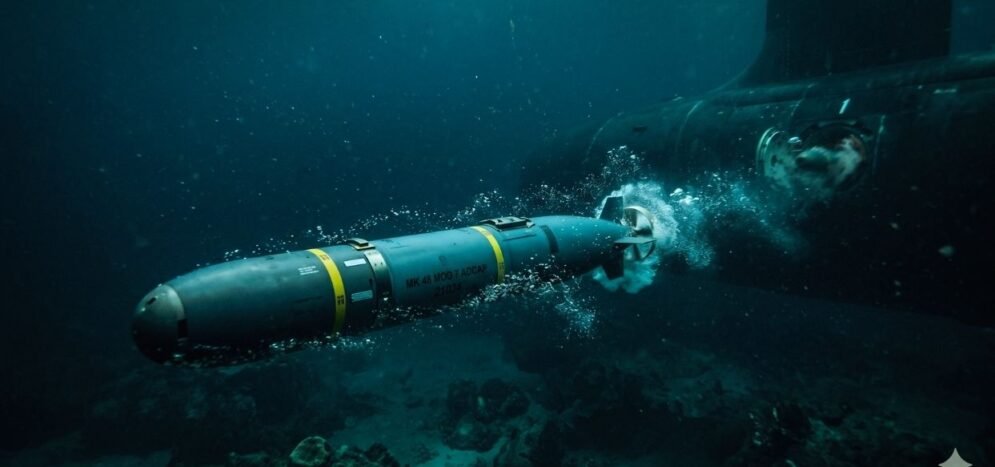
Sonar systems form the backbone, with hull-mounted arrays emitting pings to map submarines or mines through water layers, while towed arrays trail behind ships for passive listening to propeller signatures. Unmanned underwater vehicles—extra-large (XLUUVs) for persistent surveillance and smaller swarms for minehunting—extend reach without risking crews. Torpedoes like heavyweight wire-guided variants chase targets autonomously, evading decoys with wake-homing.
Anti-torpedo torpedoes intercept incoming threats, while acoustic jammers create false echoes to confuse attackers. Air-independent propulsion (AIP) lets conventional subs lurk silently for extended periods. Fiber-optic data links enable real-time feeds from depths to command centers, fusing sonar with magnetic anomaly detectors for layered defense.
These tools turn opaque oceans into tactical battlespaces.
Evolution from Cold War Hunters to Autonomous Networks
Early systems relied on noisy diesel subs and depth charges, evolving through nuclear hunter-killers with SOSUS fixed arrays. Digital signal processing in the 1990s birthed multi-static sonar networks, while UUVs emerged for mine countermeasures. Recent decades introduced lithium-ion batteries for longer UUV endurance and AI classifiers distinguishing biologics from threats.
Market growth accelerates with modular payloads swapping ISR for strike missions. Lessons from regional naval standoffs emphasize drone swarms and counter-UUV defenses, shifting from manned-centric to hybrid fleets.
Strategic Applications Securing Seas
Anti-submarine warfare (ASW) deploys dipping sonars from helicopters, cueing torpedoes on faint contacts amid thermoclines. Littoral operations clear harbors with unmanned sweepers, protecting amphibious landings. Submarines launch missiles from submerged stealth, while surface ships trail variable-depth sonar to shadow adversaries.
Undersea infrastructure defense guards cables from saboteurs using persistent UUV patrols. Arctic missions penetrate under-ice routes, mapping polynyas silently. Expeditionary forces deploy tube-launched drones for rapid response.
These capabilities deny sea control to rivals.
Market Drivers Fueling Submersion
Geopolitical tensions in chokepoints drive demand for persistent undersea surveillance. Proliferating submarine fleets from peer powers necessitate advanced ASW. Cable and pipeline vulnerabilities spur protective systems.
Unmanned attrition scales cheaply against high-value subs. Defense budgets prioritize modular upgrades over new hulls. Export packages equip mid-tier navies with UUV kits.
Climate-thawed Arctic routes open new domains.
Technical Innovations Breaking Barriers
AI-driven autonomy enables UUV swarms self-coordinating hunts. Pump-jets quiet props for acoustic stealth. Quantum magnetometers spot steel hulls sans active pings.
Cognitive sonars adapt waveforms against jammers. Homing torpedoes use multi-mode seekers evading decoys. Edge computing processes data onboard, slashing latency.
Bio-mimetic hulls reduce drag and noise.
Deployment Challenges Navigated
Thermocline refraction hides targets, countered by multi-layered nets. Biofouling clogs sensors, repelled by coatings. Communication lags in depths favor acoustic bursts.
Pressure crushes unmanned hulls, composites reinforce. Jamming drowns signals, low-probability-intercept modes adapt. Logistics emphasize tube-launched reusables.
Deep-sea trials validate extremes.
Leading Innovators and Ecosystem
Lockheed Martin’s Orca XLUUV scales mothership ops. RTX leads with sonars for Virginia-class. Northrop Grumman crafts countermeasures.
ThyssenKrupp’s AIP arms Type 212s. L3Harris integrates combat systems. Chinese HSU rivals globally. Supply chains link battery makers to software firms.
Naval demos showcase swarm hunts.
Regional Depths Prioritized
Indo-Pacific invests in sea denial wolfpacks. Europe fortifies Baltic littorals. North America modernizes carrier ASW.
Asia-Pacific scales indigenous UUVs. Arctic powers pierce ice. Middle East guards oil lanes.
Emerging Trends Reshaping Realms
Extra-large UUVs loiter as nuclear-armed deterrents. Swarm networks overwhelm defenses. Cyber acoustic spoofing mimics foes.
Lightweight torpedoes arm drones. Quantum comms enable silent links.
Operational Supremacy Secured
These technologies grant first-detect-strike, silencing subs silently. Persistent patrols deny stealth. Cost-effective unmanned scales forces.
They deter through undersea transparency.
Sustainability Beneath Waves
Low-emission AIP cuts diesel wakes. Biodegradable drones minimize wrecks. Acoustic limits protect marine life.
Future Undersea Order
The market surges toward autonomous constellations blending manned hubs with UUV wings. AI orchestrates depths, making oceans glass. Quantum edges promise unbreakable detection.
Defense underwater warfare technology markets dive deep into dominance, fusing stealth with smart systems. From silent hunters to swarm sentinels, they secure seas where battles begin below.