
Defence Soldier Systems Market: Empowering the Modern Warrior
The defence soldier systems market represents one of the most dynamic sectors in modern military procurement, focusing on equipping individual warriors with integrated technologies that enhance survivability, situational awareness, firepower, and mission effectiveness. From smart helmets displaying real-time battlefield data to exoskeletons amplifying strength and wearable sensors monitoring health, soldier systems transform the individual infantryman into a connected, networked node within a larger combat ecosystem. As warfare evolves toward multi-domain operations and asymmetric threats, the demand for advanced soldier systems surges globally, driving innovation across communications, protection, navigation, and power management.
Core Components of Modern Soldier Systems
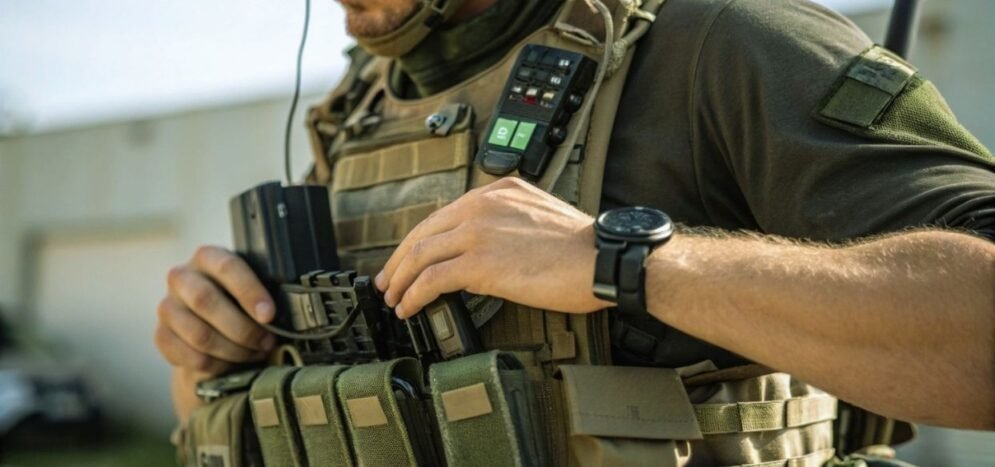
Today’s soldier systems integrate multiple subsystems into cohesive platforms that augment human capabilities without overwhelming the operator. The combat vest serves as the central hub, hosting modular pouches for ammunition, medical kits, and communication gear while integrating ballistic protection against bullets and shrapnel. Helmet-mounted displays project maps, target locations, and friendly force positions directly into the soldier’s field of view, enabling hands-free situational awareness.
Personal communication systems link soldiers to squad leaders, artillery support, and air assets through encrypted radios that resist jamming. Night vision goggles and thermal imagers extend vision into darkness, revealing hidden enemies and concealed weapons. GPS receivers and inertial navigation systems ensure soldiers never lose their way in unfamiliar terrain.
Wearable sensors monitor vital signs—heart rate, body temperature, hydration levels—and transmit alerts when a soldier requires medical intervention. These biometric feeds enable medevac teams to prioritize casualties and commanders to assess troop fatigue objectively.
Evolution from Basic Gear to Networked Warriors
Early infantry equipment focused on basic survival: uniforms, weapons, rations, and armor. The Vietnam War introduced body armor and night vision to some units. The Gulf War brought digital radios and GPS to the battlefield. Counterinsurgency operations in Iraq and Afghanistan accelerated the integration of tactical networks, enabling real-time intelligence sharing and precision fire support.
Today’s soldier systems emerge from decades of lessons learned in urban combat, mountain warfare, and jungle operations. Modular designs allow rapid reconfiguration for different missions—special operations, peacekeeping, or high-intensity conflict. Open architectures enable software upgrades without hardware replacement, future-proofing investments.
The shift from standalone equipment to integrated networks represents the most significant transformation, turning individual soldiers into networked sensors and effectors within joint all-domain command structures.
Protection Systems Saving Lives
Advanced body armor forms the foundation of soldier survivability. Ceramics, ultra-high-molecular-weight polyethylene, and aramid fibers stop high-velocity rounds while remaining lightweight enough for extended patrols. Modular plate carriers allow soldiers to add or remove ballistic protection based on threat levels, balancing mobility with security.
Helmets incorporate night vision mounts, communication headsets, and ballistic protection against shrapnel and handgun rounds. Active protection systems emerging for individual use detect incoming grenades and intercept them mid-air.
Concealment technologies adapt to surroundings, with camouflage patterns shifting colors or infrared signatures to match environments. Smoke grenades and laser dazzlers provide immediate cover during retreats or assaults.
Medical kits include tourniquets, hemostatic dressings, and battlefield antibiotics that stabilize casualties until evacuation.
Communication and Connectivity Enablers
Tactical radios form the nervous system of modern squads, enabling voice, text, and data transmission across rugged terrain. Mesh networking allows soldiers to maintain connectivity even when central infrastructure fails, with each device acting as a relay node.
Satellite terminals provide beyond-line-of-sight communication for isolated units operating in remote regions. Encryption ensures adversaries cannot intercept or decode transmissions, maintaining operational security.
Augmented reality helmets overlay digital information onto the physical world, marking enemy positions, identifying friendly forces, and guiding navigation through complex urban environments. Hands-free operation ensures soldiers keep weapons ready while accessing critical data.
Power and Energy Challenges
Powering modern soldier systems presents one of the greatest challenges. Wearable electronics, night vision, radios, and sensors all demand electricity, yet batteries remain heavy and finite. Soldiers carry multiple battery packs, adding weight that contributes to fatigue over long patrols.
Next-generation power solutions include lightweight lithium-sulfur batteries, solar-charged fabric panels, and kinetic energy harvesters that convert movement into electricity. Graphene-based supercapacitors promise rapid charging and extended life.
Energy management systems prioritize critical functions, shutting down non-essential devices when power runs low. Modular battery designs allow soldiers to swap packs quickly in the field.
Exoskeletons and Strength Amplification
Powered exoskeletons represent the frontier of soldier augmentation, using motors and sensors to amplify human strength and endurance. Passive exoskeletons use springs and dampers to reduce load-bearing stress without requiring external power. Active exoskeletons employ motors that assist lifting, walking, and climbing, enabling soldiers to carry heavier loads over longer distances without fatigue.
Military applications include carrying heavy ammunition, wounded comrades, or equipment through difficult terrain. Exoskeletons also reduce long-term injuries from repetitive strain and heavy lifting, preserving soldier health and readiness.
Market Drivers Fueling Growth
Geopolitical tensions drive nations to modernize infantry capabilities, recognizing that ground forces remain essential despite advances in air power and unmanned systems. Asymmetric threats from insurgents, terrorists, and guerrilla fighters demand agile, well-equipped warriors capable of operating in complex environments.
Urban warfare scenarios highlight the importance of individual soldier capabilities, as buildings and streets negate advantages of heavy armor and air support. Nations invest heavily in soldier systems to maintain edge in close-quarters combat.
Export markets expand as allied nations seek turnkey solutions with technology transfer agreements. Regional powers develop indigenous systems to reduce dependency on foreign suppliers.
Regional Dynamics and Capabilities
North America leads innovation with advanced programs integrating AI, robotics, and next-generation materials. Europe collaborates through multinational initiatives standardizing interfaces across allied forces. Asia-Pacific nations scale domestic production amid border tensions and maritime disputes.
Middle Eastern forces prioritize desert-hardened systems resistant to sand and heat. African militaries focus on lightweight, affordable solutions for counterinsurgency operations. Latin American countries emphasize mobility and rapid deployment capabilities.
Leading Innovators Shaping the Future
Major defense contractors develop integrated soldier suites, partnering with tech companies for electronics and software. Startups innovate in wearable sensors, exoskeletons, and energy systems. Government labs fund basic research translating into commercial applications.
Strategies blend acquisitions of agile startups with internal R&D, accelerating deployment cycles. Certification programs ensure interoperability across allied forces.
The Hybrid Future: Humans and Machines Together
The future of soldier systems embraces augmentation over replacement. Autonomous weapons and robotic assistants will handle dangerous tasks—scanning minefields, carrying heavy loads, or engaging targets at range—freeing human soldiers for strategic decision-making and missions requiring judgment, empathy, and moral reasoning.
Soldiers will command drone swarms, operate robotic mules, and coordinate autonomous systems through intuitive interfaces. The infantryman remains central to warfare, but their capabilities are exponentially amplified by technology working in concert.
Conclusion: The Irreplaceable Warrior
The defense soldier systems market thrives on the recognition that technology cannot replace human soldiers but can make them more effective, more protected, and more resilient. The future supports both autonomous weapons and enhanced soldier systems, each contributing uniquely to mission success. As warfare evolves, the most powerful forces will integrate human judgment with machine precision, creating warriors equipped for the complexities of modern conflict while retaining the moral compass and adaptability that only humans possess.