
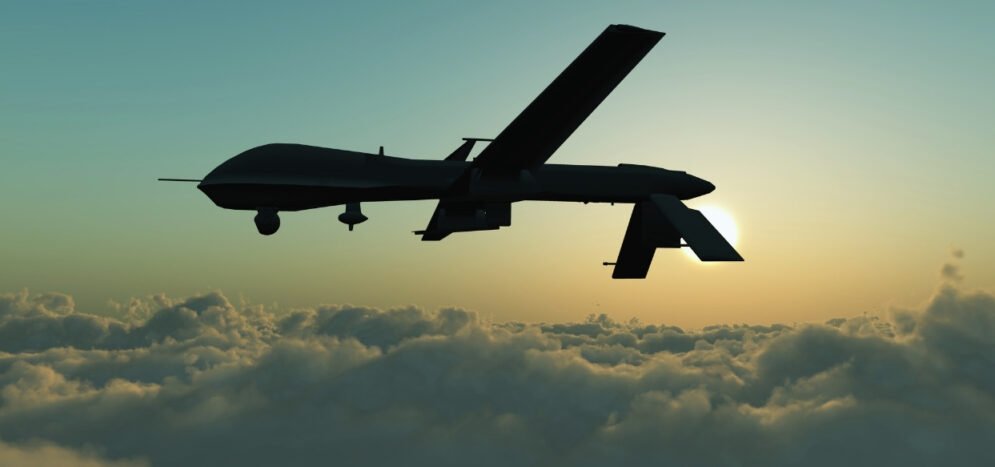
The rapid growth of Counter-Drone Technology, commonly known as drones, has created new opportunities across commercial, industrial, and defense sectors. However, the increasing availability of low-cost and highly capable drones has also created significant security challenges. Small unmanned aircraft can be used for surveillance, intelligence gathering, disruption, smuggling, or attacks against military forces and critical infrastructure.
As a result, counter-drone technology has become an increasingly important area of defense and security development. Also known as Counter-Unmanned Aircraft Systems (C-UAS) technology, these solutions are designed to detect, identify, track, and neutralize unauthorized or hostile drones.
The growing use of drones in modern conflicts has demonstrated that even relatively inexpensive unmanned systems can create serious threats. This has accelerated investment in advanced counter-drone technologies capable of protecting military bases, vehicles, airports, government facilities, and critical infrastructure.
Understanding the Counter-Drone Challenge
Unlike conventional aircraft, small drones are often difficult to detect using traditional air defense systems. Their small size, low radar signature, slow speed, and ability to fly at low altitudes can make them challenging targets.
Commercially available drones can also operate autonomously or be controlled remotely from a considerable distance. Some systems can follow pre-programmed routes, reducing the effectiveness of countermeasures focused only on disrupting communications between the drone and its operator.
Modern threats have also become more complex. Security forces may face individual drones, coordinated groups, or larger drone swarms. These challenges require counter-drone systems that can respond quickly and distinguish between friendly, authorized, and potentially hostile unmanned aircraft.
For this reason, an effective counter-drone solution usually combines multiple technologies rather than relying on a single sensor or interceptor.
Detection and Identification Systems
The first stage of counter-drone operations is detecting the presence of an unmanned aircraft. Several sensor technologies can be used to identify and track potential threats.
Radar remains one of the most important components of a counter-drone system. Specialized short-range radars can detect small aerial objects and provide information about their position, speed, direction, and altitude. However, radar performance can be affected by terrain, buildings, weather conditions, and the drone’s physical characteristics.
Radio frequency, or RF, detection systems can identify signals transmitted between a drone and its operator. These systems can be useful for locating both the unmanned aircraft and, in some cases, the source of the control signal.
Electro-optical and infrared cameras provide visual confirmation and help operators identify the type of object detected. These sensors can support operations during both daytime and low-light conditions.
Acoustic sensors may also be used to detect the distinctive sound produced by drone motors and propellers. While their range can be limited, they can provide an additional layer of detection in certain environments.
By combining these technologies, counter-drone systems can improve detection accuracy and reduce the possibility of false alarms.
Tracking and Threat Assessment
Detecting a drone is only the first step. Security personnel must determine whether the aircraft represents a genuine threat.
A modern counter-drone system uses command-and-control software to combine data from different sensors. This creates a more complete operational picture and allows operators to track multiple objects simultaneously.
The system can analyze factors such as the drone’s flight path, speed, altitude, location, and proximity to protected areas. A drone approaching a military installation or critical facility may require immediate attention, while an authorized commercial drone operating within an approved area may not pose a threat.
Artificial intelligence and automated data analysis are increasingly being incorporated into counter-drone systems. These technologies can help classify objects and prioritize potential threats, reducing the workload on human operators.
Automation will become particularly important as drone activity increases and security forces face larger numbers of unmanned systems in the same operational environment.
Electronic Counter-Drone Technologies
Electronic warfare is one of the major approaches used in counter-drone operations. These systems are designed to interfere with or disrupt the signals used by unmanned aircraft.
Depending on the drone and operational environment, electronic countermeasures may affect communication, navigation, or control links. The objective is to prevent an unauthorized drone from completing its mission or entering a protected area.
Electronic systems can offer a rapid response and may provide reusable defensive capabilities. However, they are not equally effective against every type of drone. Autonomous systems that rely on pre-programmed navigation may be less dependent on continuous communication with an operator.
In addition, electronic countermeasures must be carefully managed to avoid unintended interference with friendly communications, navigation systems, or civilian infrastructure.
As drone technology becomes more sophisticated, electronic counter-drone systems are also evolving to address new forms of communication and navigation.
Kinetic and Physical Interception Systems
When electronic countermeasures are insufficient, security forces may require physical methods to stop a drone.
Kinetic counter-drone systems can include specialized interceptors and other platforms designed to physically engage an unmanned aircraft. These systems may be deployed to protect fixed installations, mobile military units, or high-value assets.
Physical capture technologies are also being developed for specific applications. Such systems are intended to stop or capture smaller drones while reducing the potential damage caused by falling debris.
The selection of a kinetic or physical solution depends heavily on the operational environment. A system suitable for a battlefield may not be appropriate near an airport or in a densely populated urban area.
This highlights the importance of using a layered defense approach that provides different response options depending on the type of threat.
Directed-Energy Counter-Drone Systems
Directed-energy technologies are emerging as another important component of future counter-drone defense.
High-energy laser systems can potentially engage drones at the speed of light, offering a rapid response against selected targets. They may also reduce the dependence on conventional ammunition for certain defensive missions.
High-power microwave systems represent another area of development. These technologies are being explored for their potential to affect the electronic components of unmanned systems and address threats involving multiple drones.
Directed-energy weapons could become particularly valuable in countering drone swarms, where the use of conventional interceptors may become expensive or operationally inefficient.
However, these technologies still face challenges related to power generation, environmental conditions, range, system integration, and operational reliability.
Countering Drone Swarms
Drone swarms represent one of the most demanding challenges for modern air defense systems. A large number of unmanned aircraft operating together can overwhelm conventional detection and interception capabilities.
Traditional air defense systems were primarily designed to counter aircraft, missiles, or other high-value threats. Using expensive interceptors against large numbers of low-cost drones may not be economically sustainable.
Future counter-drone systems will therefore require greater automation, faster target processing, and the ability to engage multiple threats in a short period.
Artificial intelligence, advanced sensors, electronic warfare, and directed-energy technologies are expected to play an important role in responding to swarm attacks.
The ability to coordinate multiple defensive systems through a unified command-and-control network will also become increasingly important.
Mobile Counter-Drone Systems
Counter-drone technology is not limited to fixed installations. Military forces require mobile systems capable of protecting troops and equipment during operations.
Vehicle-mounted counter-drone platforms can combine radar, cameras, electronic warfare equipment, and interceptors into a single system. These solutions can provide protection for moving military formations and temporary operating locations.
Portable counter-drone systems are also being developed for smaller units. Such equipment can provide soldiers and security personnel with additional situational awareness against nearby unmanned aircraft.
The demand for mobile protection is increasing as drones become a regular feature of modern battlefields.
The Importance of Integrated Counter-Drone Defense
No single technology can effectively address every drone threat. A comprehensive counter-drone architecture requires the integration of detection, tracking, identification, command-and-control, and response systems.
A layered approach allows operators to use the most appropriate method for each situation. Sensors can first detect and identify a drone, while software evaluates the threat and recommends an appropriate response.
Electronic, kinetic, physical, or directed-energy systems can then provide different defensive options depending on the operational environment and threat level.
Integration also improves the efficient use of defensive resources. Rather than treating every detected drone as an immediate target, operators can prioritize threats based on their potential risk.
Future Outlook
Counter-drone technology is expected to become an increasingly important part of military and civilian security strategies. As unmanned aircraft become more autonomous, capable, and widely available, the systems designed to defend against them must also evolve.
Future solutions are likely to feature improved artificial intelligence, advanced sensor fusion, automated threat assessment, more capable electronic warfare systems, and greater use of directed-energy technologies.
Interoperability will also be essential. Counter-drone systems will increasingly need to operate as part of broader air defense and security networks, sharing information with radars, command centers, and other defensive platforms.
The continued development of low-cost, scalable counter-drone technologies will be particularly important. Defense forces need systems capable of defeating inexpensive drones without relying solely on costly interceptors.
Conclusion
Counter-drone technology has become a critical element of modern defense and security. The widespread availability and growing capabilities of unmanned aerial systems have created threats that traditional air defense solutions were not originally designed to address.
Effective protection requires a combination of detection sensors, tracking systems, intelligent command-and-control software, electronic countermeasures, physical interception capabilities, and emerging directed-energy technologies.
As drone threats continue to evolve, counter-drone systems will need to become faster, more automated, and more integrated. The ability to detect and respond to individual drones as well as coordinated swarms will play a major role in protecting military forces, critical infrastructure, and civilian airspace.
Ultimately, the future of counter-drone technology will be defined by layered defense, intelligent automation, and the development of cost-effective solutions capable of keeping pace with the rapidly changing world of unmanned aerial systems.