

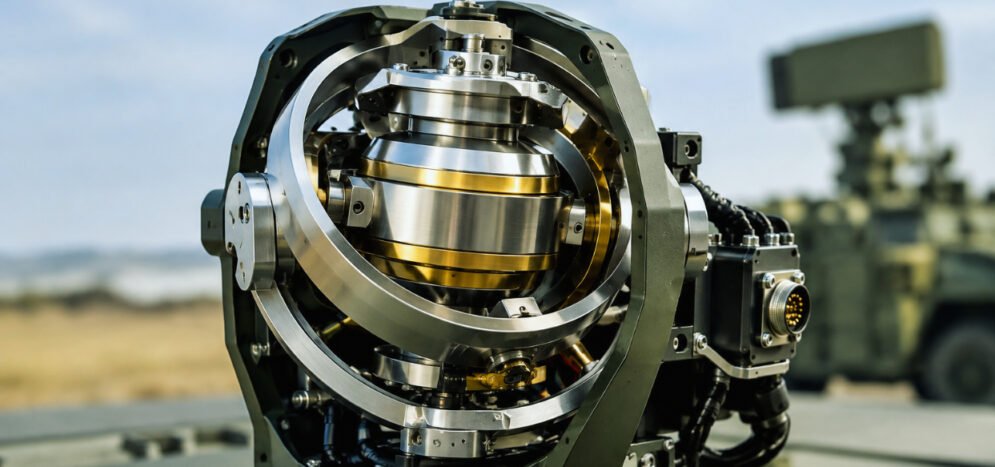
Defense gyroscope technology plays a critical role in modern military operations by enabling precise navigation, stabilization, and orientation across a wide range of defense platforms. From fighter aircraft and naval vessels to guided missiles, unmanned aerial vehicles (UAVs), and armored vehicles, gyroscopes provide essential information about movement and angular rotation. As military systems become increasingly autonomous and operate in environments where satellite navigation may be unavailable or disrupted, the demand for advanced gyroscopic solutions continues to grow.
Modern defense gyroscopes have evolved from mechanical instruments into sophisticated electronic systems capable of delivering highly accurate measurements with minimal drift. Innovations in fiber-optic gyroscopes (FOGs), ring laser gyroscopes (RLGs), and micro-electromechanical systems (MEMS) are expanding their applications across military platforms. These technologies support improved targeting accuracy, enhanced operational reliability, and greater resilience against electronic warfare threats.
Understanding Defense Gyroscope Technology
A gyroscope is a device that measures angular velocity or maintains an orientation reference by detecting rotational movement. In defense applications, gyroscopes are essential components of inertial navigation systems (INS), which calculate a platform’s position, velocity, and orientation using onboard sensors.
Unlike conventional navigation systems that depend on external signals, inertial navigation systems can operate independently of GPS or other satellite-based positioning services. This capability is particularly important for military operations in contested environments where adversaries may employ jamming or spoofing techniques to disrupt navigation signals.
Gyroscopes are commonly integrated with accelerometers to create inertial measurement units (IMUs). While gyroscopes measure rotational movement, accelerometers detect linear acceleration. Together, these sensors provide continuous information about a platform’s motion, enabling navigation computers to calculate movement and maintain accurate positioning.
Defense gyroscopes are designed to meet demanding operational requirements, including resistance to vibration, shock, temperature fluctuations, and electromagnetic interference. Their performance directly influences the accuracy and reliability of the platforms in which they are installed.
Evolution of Gyroscope Technology in Defense
The development of military gyroscopes began with mechanical systems that relied on rapidly rotating masses to maintain orientation. These instruments were widely used in early aircraft navigation, naval systems, and military guidance applications. Although effective for their time, mechanical gyroscopes were relatively bulky, required regular maintenance, and were susceptible to mechanical wear.
The introduction of laser-based and optical gyroscopes marked a significant technological advancement. Ring laser gyroscopes use the interference of counter-propagating laser beams to measure rotation, while fiber-optic gyroscopes employ light travelling through optical fiber coils to detect angular movement. Both technologies eliminated the need for traditional rotating mechanical components, improving durability and reducing maintenance requirements.
The development of MEMS gyroscopes further transformed the industry by enabling compact, lightweight, and cost-effective sensor designs. These systems are particularly valuable for small UAVs, portable military equipment, and applications where size, weight, and power consumption are critical considerations.
Today, defense gyroscope development focuses on improving measurement precision, reducing drift, enhancing sensor fusion, and enabling reliable operation in GPS-denied environments.
Key Types of Defense Gyroscopes
Different military applications require gyroscopes with varying levels of accuracy, size, power consumption, and environmental resilience.
Fiber-Optic Gyroscopes (FOGs): FOGs use the Sagnac effect, in which light travelling in opposite directions through a rotating optical path experiences a measurable phase difference. They offer high reliability, long operational life, and strong resistance to mechanical wear. FOGs are widely used in naval navigation, aircraft systems, missile guidance, and advanced inertial navigation platforms.
Ring Laser Gyroscopes (RLGs): RLGs measure rotation using laser beams travelling in opposite directions within a closed optical cavity. Their high precision makes them suitable for demanding military applications, including strategic navigation systems, aircraft, and missile guidance. They are valued for their stability and ability to provide accurate angular measurements over extended operating periods.
MEMS Gyroscopes: MEMS technology uses microscopic vibrating structures to detect angular movement. These sensors are compact, lightweight, and relatively economical to manufacture. Although conventional MEMS gyroscopes generally offer lower accuracy than high-grade optical systems, continuous improvements are expanding their suitability for tactical UAVs, robotics, and autonomous military platforms.
Mechanical Gyroscopes: Traditional mechanical gyroscopes remain relevant in certain legacy systems and specialised applications. However, their use in newly developed military platforms has declined as solid-state and optical technologies offer improved reliability and reduced maintenance requirements.
Importance of Gyroscopes in Modern Military Operations
Gyroscope technology supports several critical defense functions, making it an integral component of modern military systems.
In aerospace applications, gyroscopes help maintain aircraft orientation, stabilise flight-control systems, and support navigation during complex manoeuvres. Fighter aircraft, helicopters, and transport platforms depend on accurate motion measurements to maintain stability and operational control.
In missile systems, gyroscopes provide essential guidance information by tracking angular movement and helping maintain the intended flight trajectory. When integrated with inertial navigation systems, they support accurate guidance throughout flight, including periods when external navigation signals are unavailable.
Naval platforms also rely heavily on gyroscopic technology. Submarines use inertial navigation systems to maintain accurate positioning underwater, where GPS signals cannot penetrate. Surface vessels employ gyroscopes for navigation, stabilisation, and the alignment of radar, sonar, and weapon systems.
In land-based operations, gyroscopes support the stabilisation of tank guns, remotely operated weapon stations, and surveillance equipment. These capabilities enable military platforms to maintain accurate sensor and weapon alignment while moving across uneven terrain.
Furthermore, gyroscopes are increasingly important for autonomous military systems, including UAVs, unmanned ground vehicles (UGVs), and unmanned underwater vehicles (UUVs). They provide continuous motion data that enables autonomous platforms to navigate, maintain stability, and execute missions with limited human intervention.
Technological Advancements Driving Market Growth
The defense gyroscope market is experiencing technological transformation driven by increasing military requirements for precision navigation, autonomy, and operational resilience.
One of the most significant developments is the integration of artificial intelligence (AI) and advanced sensor fusion algorithms into inertial navigation systems. By combining gyroscope measurements with accelerometers, GNSS receivers, magnetometers, and other sensors, modern navigation systems can improve positioning accuracy and compensate for individual sensor limitations.
The growing emphasis on GPS-denied navigation is another major driver. Military forces require navigation systems capable of maintaining reliable performance when satellite signals are disrupted by electronic warfare. High-performance gyroscopes enable platforms to continue calculating their movement and orientation without depending entirely on external positioning services.
Miniaturisation is also expanding the technology’s application scope. Advances in MEMS fabrication and optical component design are enabling smaller gyroscopic systems suitable for compact drones, loitering munitions, and portable military equipment.
Additionally, improvements in manufacturing processes, digital signal processing, and calibration techniques are helping reduce sensor errors and improve long-term stability. These developments are particularly important for systems that must operate autonomously for extended periods without recalibration.
Challenges and Future Outlook
Despite technological progress, defense gyroscope manufacturers face several challenges. High-precision optical gyroscopes can involve substantial development and manufacturing costs, while compact MEMS systems may experience greater measurement drift over time. Maintaining accuracy across extreme temperatures, vibrations, and demanding operational conditions also requires sophisticated engineering and calibration.
Another challenge involves integrating gyroscopes into increasingly complex military architectures. Modern platforms require seamless compatibility between navigation sensors, mission computers, communication systems, and autonomous control software. Manufacturers must therefore focus on interoperability, cybersecurity, and long-term system reliability.
Looking ahead, defense gyroscope technology is expected to remain a critical enabler of military modernisation. Continued advancements in photonic integrated circuits, quantum sensing, advanced MEMS architectures, and AI-enabled navigation are likely to expand the performance capabilities of future systems.
As defense forces invest in autonomous platforms, precision-guided weapons, advanced aircraft, and next-generation naval systems, the importance of reliable inertial navigation will continue to increase. Gyroscopes will remain central to these developments, providing the precision, stability, and independence required for effective military operations in increasingly complex and contested environments.