
Combat Drone Technology: Revolutionizing Modern Military Operations
Introduction
Combat drone technology has emerged as one of the most significant advancements in modern defense systems. These unmanned aerial platforms have transformed military operations by providing intelligence, surveillance, reconnaissance (ISR), and precision strike capabilities without placing pilots in harm’s way. As military forces increasingly adopt autonomous and remotely operated systems, combat drones are becoming an essential component of air, land, and maritime operations.
Advancements in artificial intelligence (AI), sensor technology, satellite communication, and precision-guided weapons have greatly enhanced the effectiveness of combat drones. Today, they are capable of carrying out complex missions ranging from target identification and battlefield monitoring to precision attacks in highly contested environments. As defense organizations continue to invest in next-generation unmanned combat systems, combat drone technology is expected to play an even greater role in future warfare.
What is Combat Drone Technology?
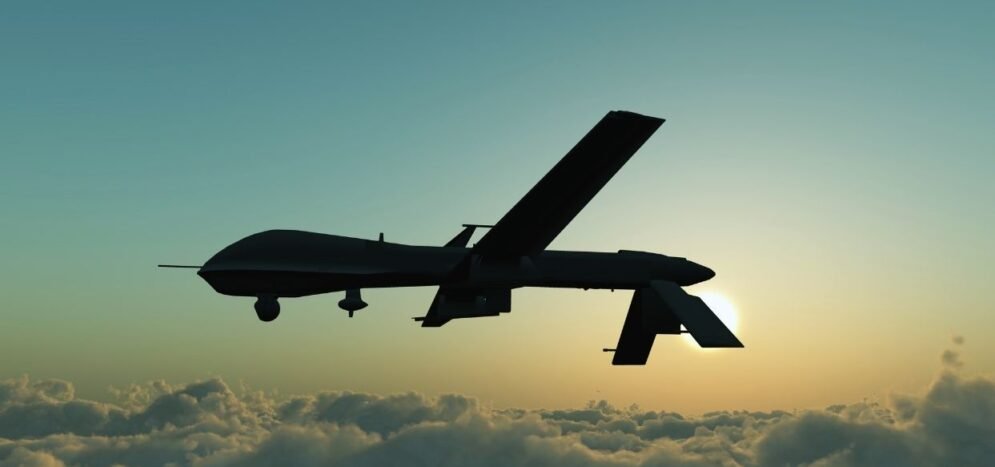
Combat drone technology refers to the development and deployment of unmanned aerial vehicles (UAVs) designed specifically for military combat operations. Unlike surveillance drones that primarily collect intelligence, combat drones are equipped with weapon systems capable of engaging ground, naval, or aerial targets.
These drones are controlled remotely by operators through secure communication networks or operate with varying levels of autonomy using advanced onboard computers and AI-driven navigation systems. Their ability to perform dangerous missions while reducing risks to military personnel has made them valuable assets for modern armed forces.
Combat drones are available in different sizes and configurations, from lightweight tactical drones supporting frontline troops to long-endurance unmanned combat aerial vehicles (UCAVs) designed for strategic missions.
Core Components of Combat Drone Technology
The performance of a combat drone depends on the integration of several advanced technologies.
Flight Control and Navigation
Modern combat drones utilize sophisticated flight control computers, Global Positioning System (GPS), inertial navigation systems (INS), terrain-following software, and autonomous flight management systems. These technologies allow drones to maintain stable flight, execute pre-programmed missions, and operate effectively under diverse environmental conditions.
Sensor Systems
Combat drones carry a variety of sensors that provide real-time battlefield intelligence. Common payloads include electro-optical cameras, infrared imaging systems, laser rangefinders, synthetic aperture radar (SAR), and multispectral sensors. These systems enable accurate target detection, tracking, and identification during both day and night operations.
Secure Communications
Reliable communication is critical for combat drone operations. Encrypted radio links, satellite communication (SATCOM), and advanced data transmission systems allow operators to monitor missions, control drone movements, and receive live intelligence while protecting communications from interception or electronic attacks.
Weapon Systems
Combat drones are equipped with precision-guided weapons such as air-to-ground missiles, laser-guided bombs, anti-armor munitions, and loitering attack payloads. Integrated fire-control systems ensure accurate engagement while minimizing unintended damage.
Artificial Intelligence
Artificial intelligence improves mission performance by enabling automated route planning, target recognition, obstacle avoidance, sensor data analysis, and autonomous flight management. AI also reduces operator workload and enhances overall mission efficiency.
Key Capabilities of Combat Drones
Combat drones provide military forces with capabilities that are difficult to achieve using conventional aircraft alone.
Precision Strike
One of the primary strengths of combat drones is their ability to conduct highly accurate strikes against designated targets. Advanced guidance systems and precision munitions enable drones to neutralize threats while reducing collateral damage.
Persistent Surveillance
Unlike many manned aircraft, combat drones can remain airborne for extended periods. Their long endurance allows continuous monitoring of operational areas, providing commanders with real-time intelligence and improved situational awareness.
Rapid Deployment
Combat drones can be deployed quickly in response to emerging threats. Their flexibility makes them suitable for supporting military operations in remote, hostile, or difficult-to-access locations.
Operations in High-Risk Environments
Combat drones can operate in areas with strong enemy air defenses or hazardous conditions where sending manned aircraft would involve significant risk. Their unmanned design helps preserve human lives while maintaining operational effectiveness.
Technological Advancements
Combat drone technology continues to evolve rapidly with innovations that improve performance, survivability, and operational flexibility.
Artificial intelligence is enabling higher levels of autonomy, allowing drones to process battlefield information, identify targets, and optimize flight paths with limited operator intervention.
Improved sensor technologies provide greater detection range, higher-resolution imagery, and enhanced target identification capabilities under challenging environmental conditions.
Advanced propulsion systems are increasing flight endurance, enabling drones to cover larger operational areas and remain airborne for longer missions.
Low-observable airframe designs and radar-reducing materials are improving drone survivability in contested airspace by reducing their radar signatures.
Network-centric communication systems allow combat drones to exchange information with other military assets, supporting coordinated operations and faster decision-making.
Benefits of Combat Drone Technology
Combat drones offer numerous operational advantages that make them an increasingly important part of military modernization programs.
One of their greatest advantages is reducing the exposure of military personnel to hostile environments. Missions that previously required manned aircraft can now be completed remotely, significantly lowering operational risks.
Combat drones also deliver exceptional operational flexibility. Their ability to perform surveillance, reconnaissance, and precision strike missions using a single platform improves overall mission efficiency.
Long endurance enables continuous battlefield monitoring, providing commanders with accurate and timely intelligence throughout military operations.
Their precision targeting capabilities support effective engagement while minimizing collateral damage, making them valuable for both conventional and asymmetric warfare scenarios.
Challenges
Despite rapid technological progress, combat drone technology continues to face several operational challenges.
Cybersecurity remains a major concern because drones rely heavily on digital communication networks. Protecting these systems from cyberattacks, signal interference, and electronic warfare is essential for mission success.
Maintaining reliable communication links during long-range operations can also be challenging, particularly in contested electromagnetic environments.
As autonomous capabilities continue to advance, military organizations must ensure that drone operations remain subject to appropriate human oversight and comply with international laws governing armed conflict.
In addition, integrating advanced sensors, AI software, and secure communication systems increases development complexity and lifecycle costs.
Future Outlook
The future of combat drone technology will be defined by greater autonomy, improved intelligence, and enhanced connectivity. Artificial intelligence will continue to improve mission planning, navigation, target recognition, and operational decision-making.
Future combat drones are expected to feature increased endurance, enhanced stealth characteristics, more powerful onboard computing, and greater interoperability with other military platforms. Advances in communication technologies and battlefield networking will enable seamless coordination between unmanned and manned systems, improving overall mission effectiveness.
As global defense modernization efforts continue, combat drones will remain at the forefront of military innovation, providing armed forces with greater operational flexibility, precision, and situational awareness.
Conclusion
Combat drone technology has fundamentally changed the way military operations are conducted by combining advanced sensors, secure communications, artificial intelligence, and precision weapon systems into highly capable unmanned platforms. Their ability to perform intelligence gathering, surveillance, and precision strike missions while minimizing risks to personnel makes them indispensable in modern defense operations.
Continuous technological innovation is enhancing the capabilities of combat drones, making them more autonomous, resilient, and effective in increasingly complex operational environments. As military requirements evolve, combat drone technology will continue to shape the future of defense, offering armed forces faster decision-making, improved operational efficiency, and superior battlefield capabilities.