

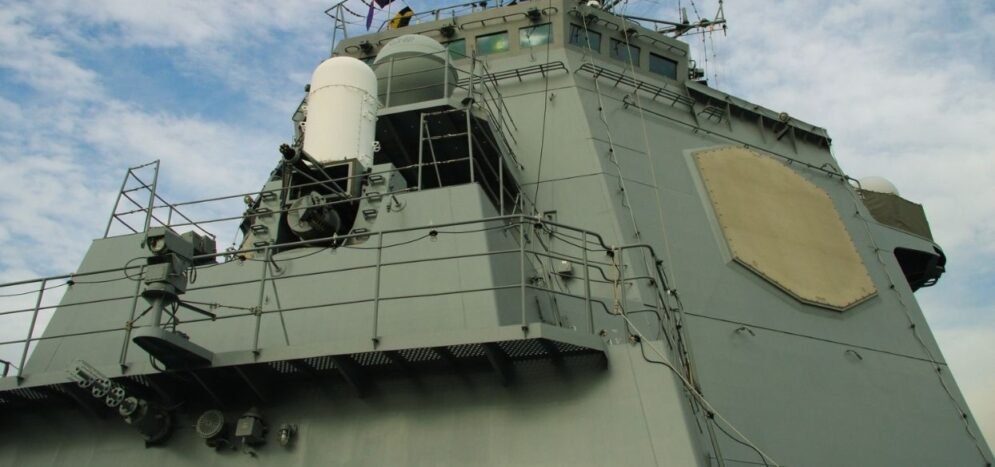
Naval Optronics Market: Illuminating the Seas with Precision Optics
Naval optronics encompasses the sophisticated electro-optical and infrared systems that serve as the eyes and ears of modern warships, providing commanders with unparalleled situational awareness across vast oceans and contested littorals. These technologies integrate cameras, lasers, thermal imagers, and sensors into masts, turrets, and unmanned vehicles, enabling detection, tracking, and engagement of surface, air, and subsurface threats day or night. This dynamic market powers frigates, destroyers, carriers, and submarines, blending rugged durability with cutting-edge imaging to maintain maritime superiority in an era of hybrid warfare.
Core Components of Naval Optronics
Optronics suites feature stabilized electro-optical directors housing LWIR/EO cameras for long-range identification, fused with laser rangefinders for precise targeting. Multi-sensor masts consolidate periscopes, radars, and IR search-track systems into low-profile sail arrays, minimizing radar cross-section. Gyro-stabilized gimbals maintain lock amid pitch and roll, with image stabilization algorithms compensating for sea state.
Laser dazzlers blind drone optics non-lethally, while hyperspectral imagers discern decoys from threats by material signature. Fiber-optic links pipe feeds to CIC consoles, overlaid with augmented reality for operator intuition. Cooling systems sustain cooled MWIR detectors through tropical heats.
Modularity allows swaps for mission-specific payloads.
Evolution from Binoculars to Battle Managers
Early naval optics relied on manual telescopes and searchlights, evolving into World War II radar-assisted gun directors. Cold War brought FLIR pods for night periscope watches. Digital fusion arrived with Aegis SPY-1 integrations, birthing 360-degree optronic masts.
Third-gen systems add AI auto-trackers, while gallium nitride amplifiers boost laser power. Unmanned surface vessels now embed optronics for autonomous patrols. Lessons from Black Sea clashes refined drone defense modes.
Strategic Applications Across the Fleet
Destroyers employ optronic fire-control for Harpoon salvos, spotting skimmers amid clutter. Frigates fuse mast cams with sonars for ASW, cueing torpedoes on periscopes. Carriers launch drone swarms guided by deck-edge directors.
Submarines peer via photonics masts, IDing hull numbers through wave-piercing optics. Amphibious ships track landings with long-wave thermals piercing smokescreens. Coast guard cutters spot smugglers via NIR spotters.
These eyes enable first-shot kills at sea.
Market Drivers Sailing Demand
Peer navies proliferate stealthy corvettes, demanding passive ID beyond radar. Littoral drone swarms spur EO countermeasures. Export modernizations equip allies with mast upgrades.
Budget scrutiny favors COTS hardened for salt spray. Coalition ops standardize Link-16 feeds from optronics. Arctic thaws open under-ice surveillance needs.
Urban coastal raids need clutter rejection.
Technical Innovations Piercing Horizons
Cooled HgCdTe detectors spot jet plumes at standoff. Multispectral fusion defeats fog camouflage. AI classifiers tag RHIBs amid wakes automatically.
MEMS mirror arrays steer laser beams adaptively. Quantum dots boost SWIR sensitivity sans cooling. Holographic waveguides pipe 4K feeds to helmets.
Edge processing tracks amid jamming.
Deployment Challenges Weathered
Salt corrosion etches domes, repelled by diamond-like coatings. Shock from guns jars optics, cushioned by viscoelastic mounts. Moisture fogs lenses, purged by desiccants.
EMI blinds sensors, shielded by mu-metal. Logistics favor drop-in directors. Cyber seals video buses.
Shake tables verify survivability.
Leading Innovators and Maritime Ecosystem
Safran leads with Vigy masts on FREMMs. Leonardo’s OTO Melara arms Type 31s. Rheinmetall crafts Attica thermals for Leopards at sea.
L3Harris integrates photonics for Virginia sails. Chinese CETC exports to Belt-Road fleets. Chains link lens grinders to FPGA coders.
Naval expos demo live tracks.
Regional Naval Priorities
Indo-Pacific prioritizes long-range drone ID for chokepoint patrols. Europe fortifies Baltic shallows against subs. Mideast dazzles pirate skiffs.
Arctic fleets pierce ice fogs. South China Sea claimants spot artificial islands.
Emerging Trends Scanning Seas
Directed-energy dazzlers scale to hard-kills. Swarm-tracking mosaics fuse drone feeds. Quantum lidar maps seabeds silently.
AR overlays cue gunners intuitively. Bio-inspired optics mimic squid camouflage.
Operational Supremacy Secured
Optronics grant over-the-horizon awareness, spotting salvos ere launch. Fusion with radar defeats jamming. Night/all-weather edges flip peer fights.
They deter through dominance, foes visible always.
Sustainability Afloat
Low-power detectors extend patrols. Recyclable composites replace alloys. Solar skins trickle auxiliary power.
Future Waves of Vision
Naval optronics evolve to god’s-eye nets, unmanned eyes feeding carriers. Quantum sensors herald unbreakable detection. Multispectral mastery defeats all veils.
This market lights lethal seas, turning waves into warfighting wins. From mastheads to mini-drones, optronics orchestrate oceanic supremacy.