

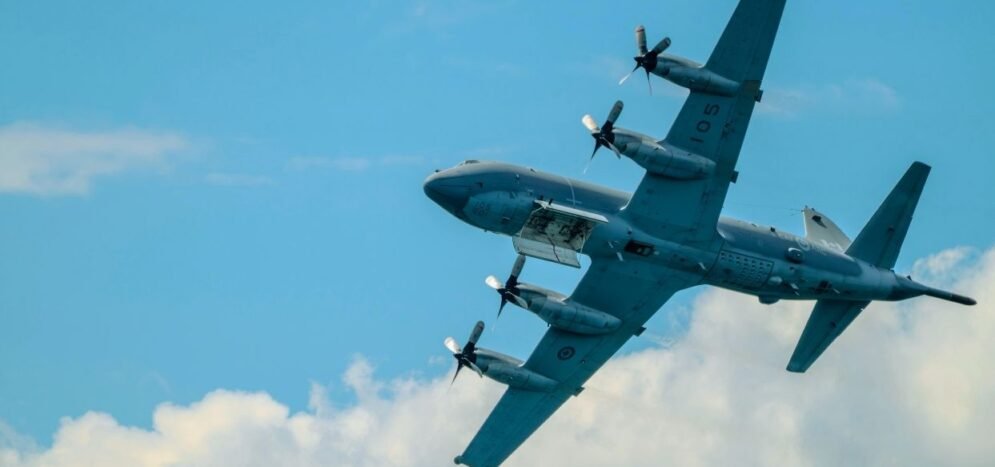
Special Mission Aircraft Technology: Eyes, Ears, and Force Multipliers
Special mission aircraft represent the pinnacle of adaptable military aviation, fundamentally transforming commercial or transport airframes into multi-role platforms for intelligence, surveillance, reconnaissance (ISR), maritime patrol, electronic warfare, and command-control. Consequently, these versatile workhorses—ranging from turboprops like the Beechcraft King Air to jetliners like the Boeing 737-based P-8 Poseidon—integrate advanced sensors, communications suites, and mission systems to extend operational reach without dedicated fighters or bombers. Ultimately, this technology insight explores how SMA evolve standard airframes into indispensable assets for modern networked warfare.
Core Technologies Powering Versatility
To begin with, SMA fuse commercial avionics with military-grade modifications, starting with reinforced airframes to handle sensor pods, palletized mission bays, and heavy electronics. For instance, rotodomes house spinning AESA radars scanning 360 degrees for airborne threats or surface vessels, while EO/IR turrets provide day-night imaging stabilized against turbulence. Simultaneously, SIGINT antennas rake the spectrum for enemy emissions, geolocating emitters via time-difference-of-arrival.
Furthermore, open mission systems run software-defined payloads, thereby swapping ISR for ELINT via modular racks. In addition, SATCOM links pipe high-bandwidth feeds to ground stations, even as towed arrays dip sonobuoys for submarine hunts. Meanwhile, directed computing fuses multi-sensor data into common operational pictures shared across coalitions. Finally, redundant power plants and fly-by-wire upgrades ensure endurance in contested airspace.
Evolution from Niche to Networked
Historically, early SMA traced to Cold War conversions like the P-3 Orion, mating ASW gear to props for Atlantic patrols. However, post-Gulf War digitization birthed multi-mission jets like the P-8, blending commercial efficiency with turbofan range. More recently, drone integration now embeds SMA tech in loyal wingmen, effectively extending eyes forward.
Moreover, modular avionics replaced wired harnesses, thus enabling rapid reconfigurations. Looking ahead, AI-driven autonomy previews unmanned SMA, slashing crew needs. At the same time, commercial off-the-shelf components hardened for mil-specs slashed costs, subsequently proliferating fleets globally.
Strategic Missions Redefining Roles
In terms of application, maritime patrol variants like P-8s drop sonobuoys and fire Harpoons, hunting subs in vast oceans. Conversely, AWACS relatives such as the E-7 Wedgetail orchestrate air battles, cueing fighters via datalinks. Similarly, ELINT platforms like the RC-135 Rivet Joint map adversary radars, feeding jamming plans.
On a smaller scale, light turboprops like the King Air 350ER scout borders or support SOF insertions with EO pods. Alternatively, gunships convert transports into AC-130 successors, circling targets with sensors and cannons. Beyond combat, humanitarian configs airlift aid or evac under fire, flexing to disasters. Together, these platforms knit joint forces, ultimately turning data into decisive strikes.
Market Drivers Fueling Proliferation
Currently, peer competitions demand persistent ISR amid A2/AD bubbles, thereby favoring long-endurance SMA over fighters. Additionally, budget realities prioritize conversions over clean-sheet designs. Moreover, export appeal equips allies with affordable eyes, bypassing high-end stealth. Furthermore, interoperability mandates open architectures for NATO-plus ops. In other contexts, urban conflicts need low-collateral loiterers. Interestingly, climate ops extend to wildfire mapping or Arctic patrols as well.
Technical Innovations Expanding Horizons
Technologically speaking, 3D AESA radars shrink rotodomes while multiplying beams. Alongside this, hyperspectral imagers spot camouflaged assets by material signature. Additionally, cognitive EW auto-tunes jammers against agile radars.
In the realm of communications, Gallium nitride amps boost SATCOM range. Meanwhile, electric propulsion previews silent hybrids, and blockchain secures shared battlespace data. Even more advanced, quantum magnetometers detect subs sans acoustics. Finally, machine learning auto-targets, thereby cueing weapons ethically.
Deployment Challenges and Solutions
Despite these advances, sensor fusion often overloads crews; fortunately, this is eased by AI assistants. Another issue is that EMI from onboard jammers blinds own arrays, though it is mitigated by frequency isolation. Likewise, high-G mods stress airframes, which are countered by composite wings.
To address security, cyber vulnerabilities harden via zero-trust nets. On the operational side, logistics favor pallet swaps for hour-long re-roles. Furthermore, extreme ops demand heated de-icers or desert filters. Consequently, trials in electronic combat ranges are essential to hone reliability.
Leading Innovators and Ecosystem
Within the industry, Boeing dominates P-8/E-7 lines, scaling 737s for navies. Meanwhile, Northrop Grumman crafts E-2 Hawkeye rotodomes and E-8 JSTARS successors, while Lockheed modifies the C-130J for SOF. Across the Atlantic, Airbus fields the C295/CN235 for light ISR. Elsewhere, IAI adapts Gulfstreams for SIGINT, and HAL builds Dornier 228s for India. Underpinning this, supply webs span sensor fabs to software integrators. Ultimately, partnerships successfully fuse OEMs with mission specialists.
Regional Priorities and Adaptations
Geographically, Indo-Pacific navies prioritize ASW SMA for sea lanes. Conversely, Europe fortifies Baltic AWACS against massed air. In the Mideast, militaries adapt transports for drone motherships. Meanwhile, Africa employs turboprops for border ISR. Further north, Arctic configs add ice-penetrating radars. Lastly, littoral forces embed SMA in patrol craft.
Emerging Trends Shaping Futures
Looking toward tomorrow, unmanned SMA swarms will provide persistent coverage. Simultaneously, directed-energy turrets will dazzle missiles. For preparation, Metaverse sims train crews virtually. Furthermore, hypersonic chasers preview boost-phase intercept cueing. On the environmental front, sustainable fuels certify full blends. Eventually, neural interfaces may fuse the pilot directly with the battlespace.
Operational Impact and Force Multiplication
In practice, SMA grant standoff awareness, often spotting salvos ere launch. Moreover, networked feeds synchronize strikes across domains. Because their endurance outlasts fighters, they enable 24/7 ops. Consequently, they deter through presence, making adversaries wary of unseen eyes. Above all, cost-effective conversions allow militaries to scale fleets rapidly.
Sustainability and Lifecycle Advances
Regarding sustainability, electric taxis cut ramp emissions. Additionally, recyclable composites replace alloys. Through design, modular bays extend airframe lives. Finally, data analytics predict fatigue, thereby optimizing fleets.
Future Skies of Special Missions
In conclusion, special mission aircraft are evolving toward autonomous constellations, effectively blending manned hubs with drone wings. In this new era, cognitive sensors herald self-tasking battlespaces, while open architectures promise endless adaptability. Overall, this market crafts aerial orchestrators, literally turning transports into titans. From ocean depths to orbit cues, SMA weave supremacy across spectra, ultimately ensuring no threat flies unseen.