
Theatre Defence Technology: Shielding the Battlefield
Theatre defence technology acts as the main shield for modern military operations. Specifically, it keeps troops, bases, and equipment safe within specific combat zones. These integrated systems work together to find, track, and stop airborne threats like missiles and drones before they can strike. As a result, this technology allows military forces to maintain control over contested airspace through a mix of precision radar and agile interceptors.
Core Elements of Modern Defense
Theatre defense relies on “layered” architectures. First, advanced radar arrays provide early warnings by scanning the horizon for threats. These sensors are vital because they can tell the difference between a real enemy and background “clutter” or electronic jamming.
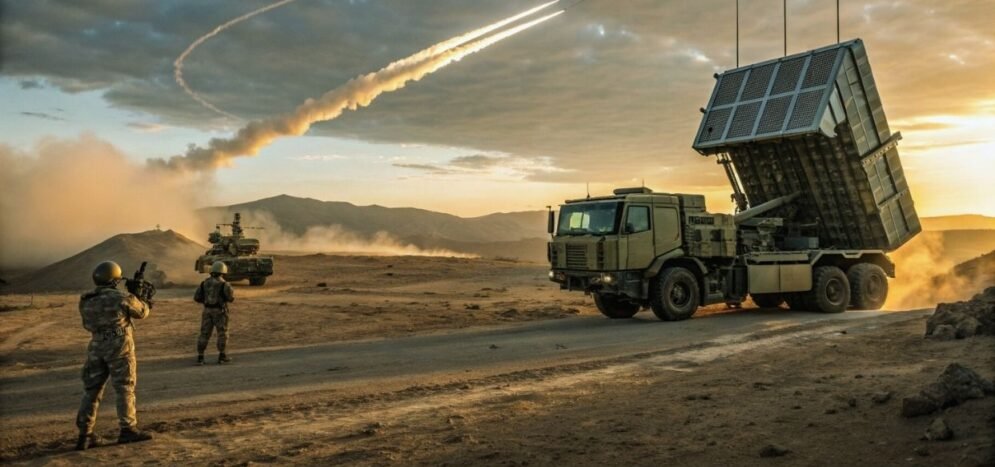
Moreover, command centers act as the “brain” of the operation. They fuse data from satellites and ground stations to make decisions in seconds. In addition to fixed bases, mobile launchers offer great flexibility. These units can move quickly to stay ahead of shifting threats in harsh environments.
How These Systems Evolved
Early systems focused mainly on stopping high-altitude bombers. However, technology has since evolved into a multi-threat shield. Consequently, today’s integrated grids can stop tactical ballistic missiles and cruise missiles alike.
Digital upgrades have also introduced “sensor fusion.” This means the system merges radar, infrared, and optical data into one clear picture. Furthermore, modular designs now allow engineers to “plug and play” new software, often using AI to help the system act autonomously.
Strategic Uses on the Ground
In the field, theatre defense protects convoys and staging areas. For instance, air defense batteries can shield infantry from drone swarms, while interceptors guard high-value targets like runways. Similarly, naval versions of this tech protect carrier groups from missiles that skim the surface of the sea.
Notably, these systems allow different branches of the military to work together. Because they share a view of the “battlespace,” an air force jet can signal a ground-based launcher to fire. This teamwork extends the reach of the military and discourages enemies from attacking.
Innovations Driving Change
Several new technologies are currently transforming how we defend the battlefield:
- Phased-array Radars: These offer 360-degree vision without needing to move mechanically.
- Directed-Energy Weapons: Specifically, lasers can now “zap” drones. This provides an endless supply of “ammo” at a very low cost.
- AI Algorithms: These help the system decide which threats to shoot first, especially during a “swarm” attack.
- Hypersonic Interceptors: These are built to chase extremely fast targets that try to dodge traditional defenses.
Facing Modern Challenges
Despite these gains, the battlefield remains a difficult place. For example, enemies use “electronic warfare” like jammers to blind sensors. Additionally, keeping these complex systems running in remote areas creates huge logistical strain.
Furthermore, cyber security is a major concern. Because these systems are networked, they must be protected by hardened firewalls to prevent hacking. Even extreme weather can be a problem, requiring the hardware to be rugged and tough.
The Future of Theatre Defense
Looking ahead, the focus is shifting toward “hypersonic” threats. To counter this, military leaders are looking at space-based sensors that can spot a launch instantly. Meanwhile, the rise of “drone motherships” is leading to new tactics, such as using microwaves or nets to stop swarms.
Ultimately, theatre defense technology acts as a silent guardian. By creating an impenetrable barrier, it allows soldiers to focus on their mission. These systems do more than just shoot down missiles; they preserve lives and ensure freedom of action in a dangerous world.