
The Skies of Tomorrow: Navigating the Defense UAV Revolution
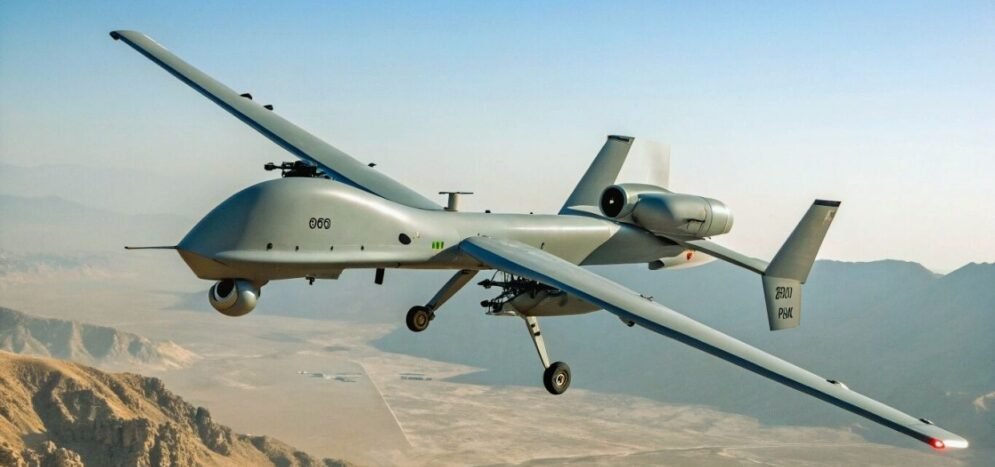
The “fog of war” is clearing. High-resolution lenses have replaced binoculars. Consequently, unmanned aerial vehicles (UAVs) have moved from niche experiments to the mainstream. They are now vital pillars of modern defense. These “silent sentinels” are reshaping battlefields. Furthermore, they are redefining borders. Geopolitical tensions are deepening from the Indo-Pacific to Europe. As a result, the demand for UAVs is surging. They offer an unparalleled ability to gather intelligence. Additionally, they execute precision strikes without risking human lives. This blog explores the dynamic defense UAV market, its drivers, and the titans steering its course.
The Unseen Engines of Growth
Strategic needs and budget goals drive the UAV boom. Therefore, nations are spending heavily on military modernization. They see UAVs as “force multipliers.” Specifically, these tools enhance surveillance and targeted operations. Moreover, rising geopolitical uncertainty accelerates procurement. Armed forces want an edge in contested airspace. Finally, the allure of cost-effective systems fuels adoption. They deliver high-impact results. However, they cost a fraction of manned aircraft expenses.
The Quest for Operational Superiority
The market also expands through a quest for operational superiority. UAVs excel in intelligence, surveillance, and reconnaissance (ISR). In fact, they provide real-time data to inform command decisions. Their precision strike potential is also high. They deliver payloads with surgical accuracy. Thus, they minimize collateral damage while maximizing effectiveness. Besides this, electronic warfare variants can jam enemy communications. This versatility extends to swarm technologies. Here, coordinated fleets overwhelm defenses through sheer numbers.
Technological Horizons: Autonomy and Beyond
Innovation drives the defense UAV sector. Notably, artificial intelligence (AI) is a major force. AI allows drones to navigate complex areas. Furthermore, they can evade threats with little human help. This reduces vulnerability. Similarly, swarm intelligence allows groups of UAVs to self-organize. They adapt to threats in real time. In addition, advancements in propulsion extend flight times. Hybrid systems now allow for persistent loitering over vast areas.
Global Innovation and Sensor Integration
Sensor fusion integrates various radars for 360-degree awareness. Simultaneously, edge computing processes data onboard. This reduces reliance on ground links that are prone to jamming. These leaps democratize access. For instance, modular designs allow tactical units to use backpack-deployable swarms. Aerospace giants are now partnering with AI specialists. Together, they are building prototypes for long-range operations. Ultimately, directed energy integrations promise laser-armed sentinels for future skies.
The landscape varies by region. North America leads with cutting-edge R&D. In contrast, Europe emphasizes collaborative frameworks. Meanwhile, the Asia-Pacific region is evolving fast. Powerhouses like China and India are driving indigenous innovations. Consequently, export-friendly designs are entering global markets. This fosters a multipolar innovation race.
Key Architects of the Aerial Arsenal
The defense UAV market is full of strategic alliances. Currently, industry heavyweights dominate the field. General Atomics defines long-endurance platforms. Specifically, they refine systems that blend surveillance with strike prowess. On the other hand, Northrop Grumman pushes boundaries with stealth designs. AeroVironment excels in tactical niches. They deliver compact, loitering munitions.
Globally, Israel Aerospace Industries offers flexible solutions. Conversely, Baykar, the Turkish innovator, disrupts with affordable models. Next, Lockheed Martin and Boeing focus on large-scale integration. They fuse UAVs into broader networked architectures. Finally, Teledyne Technologies advances sensor suites. These players compete but also collaborate. Recent acquisitions prove this trend. As a result, the market is moving toward an interconnected future.
Shadows on the Horizon: Regulatory and Ethical Hurdles
Despite this growth, the market faces challenges. First, regulatory issues stifle scalability. This is particularly true for airspace integration. Therefore, we need harmonized international standards. Second, ethical questions spark debate. People worry about autonomous lethality and privacy. Thus, there are calls for robust oversight. Third, cybersecurity is a major risk. Drones are getting smarter. However, they are also vulnerable to hacking. This necessitates fortified encryption.
Countermeasures and Supply Chain Risks
Adversaries are also deploying countermeasures. For example, jamming arrays and anti-drone swarms erode UAV advantages. This spurs an arms race in defensive tech. Additionally, global disruptions exposed supply chain fragilities. This pushes nations toward local manufacturing. Furthermore, environmental concerns regarding emissions have emerged. Nevertheless, these obstacles catalyze resilience. Investments in secure comms signal a maturing sector.
Charting the Course Ahead
We are entering a drone-dominated era. Hence, the UAV market shows resilience. It proves human ingenuity in protecting sovereignty. These aerial guardians are redefining deterrence. Although challenges persist, the trajectory points skyward. Collaborative innovations will propel this domain forward.
The message is clear for planners. Embrace the unmanned frontier. In summary, visibility is victory. Those who master the skies will command the narrative. The defense UAV revolution is reshaping the very architecture of power.