
Defense Microdrones Technology: Swarms of Stealthy Supremacy
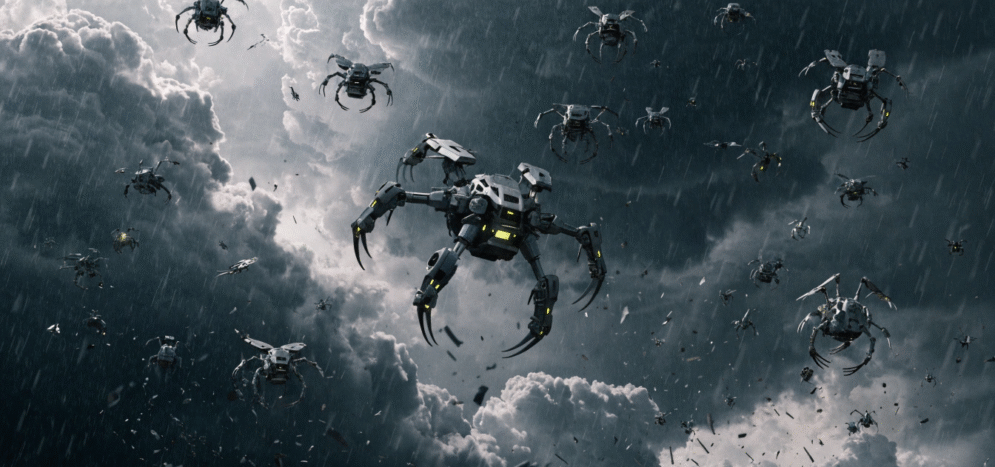
Defense microdrones represent a quantum leap in military tactics. Specifically, they deploy swarms of palm-sized unmanned aerial vehicles to outmaneuver adversaries with overwhelming numbers and precision. Furthermore, these lightweight warriors—often smaller than a human hand—integrate cameras, sensors, and explosives into frames that effortlessly slip through cracks or hover silently above battlefields. Ultimately, this cutting-edge market fuses consumer electronics with hardened military specs, empowering forces to dominate reconnaissance, electronic warfare, and strike missions without risking manned assets.
Core Anatomy of Defense Microdrones
To begin with, microdrones boast carbon fiber airframes for extreme strength-to-weight ratios, driven by micro brushless motors spinning silent propellers. Meanwhile, lithium-polymer batteries fuel short, intense bursts of energy, while gyroscopes and accelerometers ensure stability amid gunfire or heavy winds. Additionally, high-res cameras equipped with night vision and thermal overlays feed encrypted video to operators, fully stabilized by tiny gimbals.
On the sensory front, payloads detect chemicals, radiation, or acoustics to map threats in denied areas. Consequently, onboard AI cores process this data in real-time, enabling autonomous navigation around obstacles or active target locks. Moreover, payloads range from flashbangs for disorientation to shaped charges for precision kills. Because their rugged casings withstand drops, dust, and EMP pulses, they frequently bounce back for reuse. Finally, peer-to-peer swarm logic links the units, creating self-healing networks that adapt even if leader drones fall.
Evolution from Battlefield Novelties
Historically, early prototypes emerged from hobby quadcopers that were hardened for war, steadily evolving through urban combat lessons into disposable assets. Subsequently, Cold War labs birthed remote scouts, but it was recent advances in battery and chip technology that truly unlocked insect-scale operations. For example, DARPA challenges proved that swarms could overwhelm traditional air defenses, effectively birthing new doctrines for loitering munitions.
Today, gaming GPUs power these flight brains, crunching radar evasion metrics in real time. As a result, microdrones have matured from fragile scouts into kamikaze divers—acting as vital force multipliers that scale from solo spies to thousand-strong clouds.
Strategic Missions Redefining Warfare
In terms of operations, microdrones execute several critical missions:
- Reconnaissance: This shines during building clears, where microdrones infiltrate vents to relay room layouts prior to an assault.
- Perimeter Patrols: Simultaneously, these units spot infiltrators amid dense foliage, silently cueing snipers to act.
- Electronic Warfare: Additionally, specialized variants jam radios or spoof radars, completely blinding foes mid-engagement.
- Swarm Strikes: During an assault, swarm strikes saturate defenses; for instance, one drone might distract a target while its siblings strike.
Furthermore, special ops teams launch them from grenade tubes for quick over-the-hill peeks. Conversely, counter-UAS roles pit micro-swarms against larger drones, utilizing nets or microwaves to down threats en masse. Meanwhile, artillery spotters hover discreetly, lasing targets for precision fires.
Market Drivers Accelerating Adoption
Several key factors are rapidly accelerating the adoption of this technology:
- Proliferating Threats: Peer threats demand cheap, disposable sensors rather than billion-dollar jets.
- Urban Combat: Megacities favor tiny footprints capable of dodging dense clutter.
- Budget Shifts: Consequently, budgets are shifting toward attritable systems, successfully trading quantity for quality.
- Standardization: Coalition ops require interoperable protocols to standardize swarm commands across allied forces.
- Dual-Use Tech: At the same time, dual-use civilian tech speeds up military hardening, leveraging everything from phone chips to quiet propellers. Lastly, the rise of hypersonic and stealth foes continuously spurs the need for expendable decoys.
Technical Breakthroughs Unleashing Swarms
Technologically, AI flocking now mimics starlings, allowing drones to self-organize for maximum coverage without relying on GPS. Moreover, edge computing spots faces or vehicles live, drastically slashing bandwidth needs. Coupled with silent rotors and radar-absorbent coatings, these drones easily evade detection.
In addition, modular bays allow operators to swap missions mid-flight via 3D-printed parts. In parallel, bio-inspired flaps are replacing traditional props for whisper-quiet hovers. Furthermore, mesh networks relay data through individual units to penetrate deep caves or bunkers. Soon, quantum sensors will provide a preview of jam-proof navigation.
Deployment Challenges and Countermeasures
Despite these advancements, deployment challenges persist:
- Environmental Factors: Wind easily buckles tiny frames, though this is countered by counter-rotating double rotors.
- Signal Jamming: Jamming frequently drops data links, yet this is fixed by frequency-hopping autonomy.
- Swarm Collisions: Naturally, swarm collisions demand real-time pathing, which is tamed by advanced neural nets.
- Operator Overload: Controlling hundreds of airborne units causes operator overload. Therefore, VR interfaces are used to cull and organize video feeds.
Logistically, reloads heavily favor tube-launched clusters. Above all, ethical kill-chains mandate strict human oversight to manage the sheer speed of these systems, while EMP hardening utilizes Faraday cages to protect vital circuits.
Leading Innovators and the Defense Ecosystem
Within the defense ecosystem, Shield AI leads the pack with autonomous flocks, recently inking major Special Forces deals. Meanwhile, Anduril’s Roadrunner scales micro-strike capabilities, and Teledyne FLIR packs advanced EO/IR payloads. Simultaneously, giants like Boeing and Lockheed integrate these systems into motherships, launching them directly from fighter jets.
Internationally, Israeli firms excel in loitering ammo, with Rafael’s Firefly setting industry benchmarks. Furthermore, startups like BlueHalo disrupt the space with innovative counter-swarm nets. Ultimately, black-budget infusions and Pentagon trials continue to drive extreme secrecy and rapid development.
Regional Battlefields and Emerging Trends
Geographically, Indo-Pacific navies prioritize island-hop recon, using microdrones to scout fortified caves. In contrast, Europe fortifies urban chokepoints against hybrid threats, while Middle Eastern forces drill tunnel raids to sniff out IEDs. Recently, Ukraine’s battlefields birthed highly effective disposable scouts, directly influencing NATO tactics.
Looking ahead, several trends are reshaping tactics. For example, bio-hybrid bugs fuse live insects with tech for ultimate stealth. Additionally, neural pilots learn operator styles to proactively predict battlefield needs. Eventually, lattice networks will link air, ground, and sea bots seamlessly, while directed-energy micros zap enemy optics with pinpoint precision.
Conclusion: Future Skies of Supremacy
Operationally, microdrones grant a persistent stare, spotting ambushes well before they are sprung. Because swarms easily overwhelm SAMs, they enable deep strikes and humanize high-risk ops by remotely scouting booby-traps. As a result, the cost per kill plummets, permanently altering the scale of attrition warfare.
However, ethical and regulatory frontiers remain hotly debated. Specifically, autonomous kill rules mandate human-in-the-loop systems, and the risk of proliferation means rogue states can arm themselves cheaply. Consequently, DoD frameworks actively govern their use.
In conclusion, defense microdrones herald a new era of swarm warfare where quantity drowns quality. Fleets deployed straight from backpacks will outpace traditional tanks or jets. As batteries densify and AI sharpens, the skies will fill with unseen arbiters. Indeed, this market miniaturizes dominance, proving that tiny teeth can tear the toughest hides. From foxholes to aircraft carriers, microdrones claim the ultimate edge, turning modern battles into bug hunts that adversaries simply cannot win.