

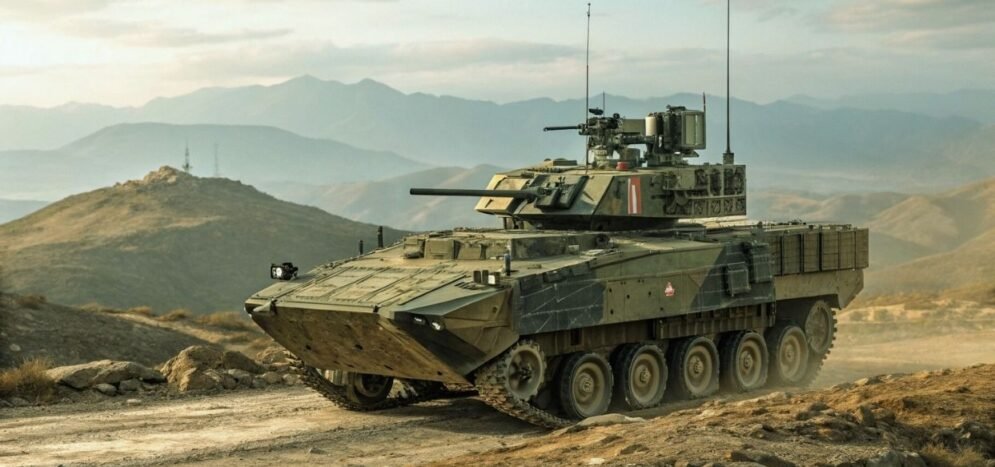
Defense Amphibious Vehicle Technology: Engineering the Impossible Transition
Defense amphibious vehicle technology transforms a single platform into a dual-domain warrior, conquering waves and then charging across mud, sand, or pavement without pause. This fusion of marine propulsion, terrestrial mobility, and combat survivability demands relentless innovation at the intersection of hydrodynamics, materials science, and digital systems.
Hull and Buoyancy Mastery
The foundation begins with the hull, sculpted for minimal drag in water yet robust enough to withstand battlefield impacts. Designers employ planing surfaces that lift the vehicle onto the water’s skin at speed, reducing resistance. Internal watertight compartments filled with lightweight syntactic foam provide inherent flotation, remaining buoyant even after hull penetrations.
Collapsible trim vanes deploy forward to prevent nose-diving in surf, while automated ballast systems shift weight dynamically for optimal trim. Inflatable pontoons or retractable skirts enhance stability during embarkation from ship ramps, then stow flush to preserve land mobility.
Dual-Mode Propulsion Systems
Propulsion refuses compromise. Tracked variants channel engine power through sprockets for land, then redirect torque to high-volume water jets for aquatic thrust. These jets swivel for steering and reverse thrust, enabling crab-like lateral movement in tight river channels.
Wheeled platforms spin large-diameter tires on land, then lower concealed propellers or switch to pump-jets integrated into the wheel hubs. Hybrid electric architectures decouple engines from final drives, allowing silent electric propulsion in water to evade acoustic detection, then seamless reversion to diesel for sustained terrestrial sprints.
Powertrain and Thermal Management
Engines breathe through raised snorkels during immersion, with intercoolers and exhaust routed above the waterline. Heat exchangers embedded in the hull dissipate excess thermal energy into surrounding water, masking infrared signatures from seeker heads. Regenerative braking on land captures kinetic energy to recharge batteries, extending aquatic endurance where refueling is impossible.
Armor and Survivability Layers
Composite ceramic matrices bonded to aluminum or titanium skeletons deflect kinetic rounds while keeping displacement low. Spaced appliqué panels detonate shaped charges prematurely, and reactive tiles neutralize tandem warheads. Active protection systems launch interceptors against incoming RPGs or missiles, functioning equally on beaches or boulevards.
Underbelly designs incorporate V-shaped deflectors to mitigate mine blasts, with energy-absorbing seats and restraint systems that remain effective whether floating or rolling. Electromagnetic pulse hardening shields electronics from nuclear or directed-energy effects.
Sensory and Command Integration
Sensor suites fuse forward-looking infrared, millimeter-wave radar, and acoustic arrays into a unified tactical picture. Periscopes extend during submersion, feeding panoramic video to crew displays. Satellite and troposcatter links maintain connectivity far from shore, while mesh networks relay data between vehicles forming ad-hoc amphibious battlegroups.
Artificial intelligence predicts wave patterns to optimize jet thrust, warns of grounding risks in shallows, and suggests evasive maneuvers against torpedo threats. Augmented reality overlays project navigation cues onto visor displays, guiding drivers through whitewater or dust storms.
Materials That Defy Corrosion and Wear
Saltwater devours steel, so exteriors receive multi-layer coatings: epoxy primers, polyurethane mid-coats, and sacrificial zinc anodes that corrode preferentially. Track pads use rubber compounds infused with Kevlar fibers for grip on coral or asphalt alike. Hinges and seals incorporate self-healing polymers that close microscopic cracks under hydraulic pressure.
Modular Mission Payloads
Standardized interfaces allow rapid swapping of turrets, sensor masts, or medical evacuation pods. One configuration mounts anti-ship missiles for over-the-horizon strikes from surf zones; another deploys bridge sections to span rivers. Unmanned surface vehicle docking bays enable launch and recovery of drones without surfacing fully.
Testing Regimens That Break and Rebuild
Prototypes endure wave tanks simulating hurricane seas, then transition immediately to obstacle courses of boulders and ditches. Salt fog chambers accelerate corrosion, while live-fire arenas test ballistic integrity post-immersion. Data from thousands of sensor channels refine finite-element models, predicting fatigue before metal fails.
Future Trajectories
Next-generation concepts explore morphing hulls that reconfigure mid-mission—lengthening for stability at sea, then compacting for urban alleys. Metamaterials could bend radar waves around the vehicle, rendering it invisible across spectra. Bio-inspired propulsion mimics manta rays, undulating flexible fins for silent, efficient travel beneath the surface.
Energy weapons may draw from supercapacitors charged by wave motion, turning ocean kinetic energy into directed blasts. Swarm intelligence will coordinate fleets of amphibious robots, some crewed, others autonomous, executing complex landings without human risk.
Defense amphibious vehicle technology continually redraws the boundaries between navy and army, ship and tank, blueprint and battlefield. Each advancement in propulsion, protection, or perception extends the reach of forces where oceans collide with continents, ensuring dominance in the crucial littoral strip that defines modern conflict.