

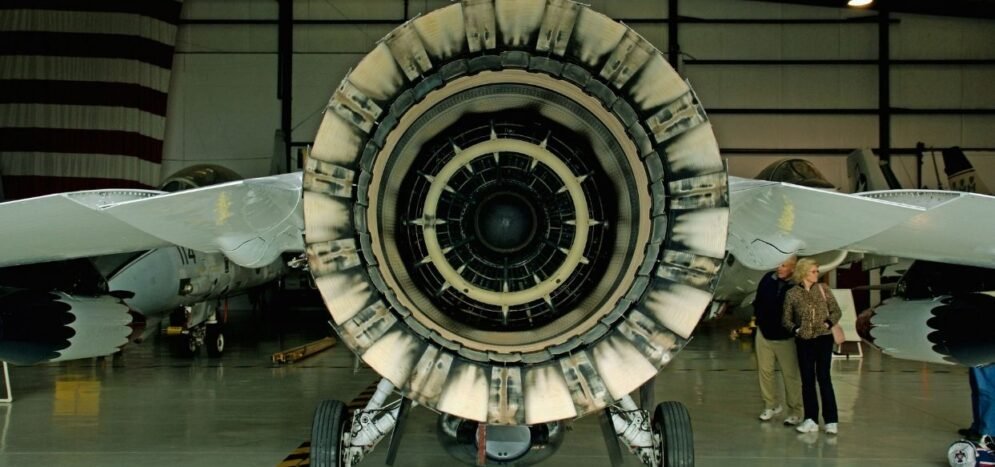
Defense Air Platforms Engines Market: Powering the Skies of Supremacy
Undoubtedly, defense air platforms engines form the beating heart of military aviation. Specifically, they propel fighters, bombers, transports, and drones through contested airspace with unmatched thrust and efficiency. Furthermore, these sophisticated powerplants blend turbine innovation, materials science, and digital controls. Consequently, they deliver the speed, stealth, and endurance demanded by modern warfare. Ultimately, this critical market fuels strategic superiority, enabling platforms—from stealth jets to loyal wingmen—to outpace, outmaneuver, and outlast adversaries.
Core Technologies Driving Performance
Currently, turbofan cores dominate the market. For instance, high-bypass designs balance raw power for takeoff with fuel-sipping efficiency for loiter. Meanwhile, axial compressors squeeze air to extreme pressures, feeding ceramic-matrix combustors that burn fuel at blistering temperatures. In addition, single-crystal turbine blades, which are cooled by intricate air paths, extract energy while defying meltdown.
Moreover, variable cycle engines shift geometries mid-flight. As a result, they easily toggle between high-thrust combat modes and efficient cruise. Similarly, thrust vectoring nozzles pivot the exhaust. Therefore, they grant super-maneuverability for dogfights or vertical landings. Additionally, afterburners inject fuel for supersonic dashes, successfully lighting up stealthy missions. Finally, adaptive fans adjust blades via actuators, automatically optimizing airflow against threats or heavy loads.
Evolution from Turbojets to Adaptives
Historically, early jets guzzled fuel in straight-through designs. However, they eventually evolved into afterburning turbojets for Cold War intercepts. Subsequently, turbofans arrived with bypass ducts, slashing consumption for heavy bombers. During this era, low-bypass fighters prioritized speed, while high-bypass transports hauled heavy logistics.
Eventually, third-generation cores introduced digital FADECs, which are self-tuning for maximum performance. Following that, fourth-gen variable cycles previewed fifth-gen adaptability. Essentially, they blended F-35 power with F-22 agility. Nowadays, electric hybrids are emerging, augmenting turbines with megawatt motors for silent operations. In the end, lessons from endless conflicts refined reliability, pushing maintenance lifespans into decades.
Strategic Applications Across Platforms
In practice, fighters rely on twin-spool engines for supercruise, sustaining Mach speeds without afterburner heat signatures. Conversely, bombers mount quad-engines for global reach, allowing them to refuel mid-air while hauling smart ordnance. Meanwhile, transports demand rugged hot-section durability for rough landing strips.
Furthermore, trainers mimic combat twins at throttled power, building pilot instincts safely. On the other hand, UAVs favor lightweight turboprops or microturbines for a persistent stare. Similarly, helicopters spin derivatives with free-power turbines driving their rotors. Consequently, engine swaps standardize fleets, which eases logistics worldwide.
Market Forces Accelerating Innovation
Unsurprisingly, geopolitical flashpoints spur next-gen programs. Because of this, militaries demand engines that outclass peers in thrust-to-weight ratios. Additionally, export races pit American, European, and Russian makers against rising Asian challengers. Furthermore, budget scrutiny heavily favors modular cores, which are upgradeable without expensive airframe swaps.
Moreover, sustainability mandates cut emissions by blending synthetic fuels with hybrid assists. Simultaneously, supply chain hardening counters international sanctions by localizing rare-earth magnets. Consequently, alliances co-develop and share IP for better interoperability. Lastly, urban air combat urgently needs short-field thrust without the noise.
Technical Breakthroughs Reshaping Propulsion
First and foremost, gallium nitride amps boost electronics, enabling precise fuel scheduling. Additionally, ceramic matrix composites halve weight while doubling temperature resistance, thereby shrinking cores. Moreover, 3D-printed fuel nozzles optimize cooling holes impossibly well.
Meanwhile, adaptive engines bleed air for cooling or re-inject it for power, effectively fooling IR seekers. Similarly, electric fans preview distributed thrust, powering wing pods silently. Furthermore, laser ignition slashes emissions by burning leaner fuel mixtures. Ultimately, quantum sensors monitor blade vibrations preemptively, averting catastrophic failures.
Deployment Challenges and Solutions
Naturally, hot-and-high bases tax engine thrust, a problem countered by flat-rated power. Moreover, salt corrosion continuously gnaws at blades, though it is repelled by sacrificial coatings. Similarly, bird strikes strongly demand self-sealing inlets.
However, cyber intrusions increasingly target FADECs, requiring them to be hardened by quantum cryptography. Additionally, overtemp conditions from missile plumes spur the use of ablative shields. Consequently, logistics favor health monitoring, predicting overhauls via advanced datalinks. Finally, foreign object damage continuously drives the need for ingestible designs.
Leading Innovators and Global Ecosystem
In the current landscape, Pratt & Whitney rules the F-35 and F-22 fleets, scaling up for sixth-gen fighters. Meanwhile, GE owns the heavy market via the F110 and F414, partnering with RTX for next-gen adaptives. Additionally, Rolls-Royce powers the Typhoons while eyeing Eurofighter successors.
Furthermore, Safran leads FCAS with M88 evolutions, while IHI eyes the GCAP. Conversely, Russian AL-41 and AL-51 families arm the Flankers and Su-57s. Globally, supply webs span from titanium forgers all the way to software houses. Ultimately, joint ventures fuse competencies, such as the GE-Safran partnership for transports.
Regional Power Plays
Regionally, the Indo-Pacific builds twin-engine heavies for ocean patrols, carefully matching carrier decks. Meanwhile, Europe collaborates on temperature-resistant cores for FCAS and Tempest programs. In contrast, the Mideast heavily funds afterburning trainers for hot desert sands.
Furthermore, Ukraine rebuilds MiG lines using Western engine swaps. Finally, Arctic operations heavily favor cold-weather starts.
Emerging Trends on the Ramp
Looking ahead, hybrid-electric technology boosts silent loitering, with batteries feeding the fans. Additionally, hydrogen burners preview zero-carbon jets. Moreover, variable geometry inlets adapt seamlessly to different Mach regimes.
Consequently, swarm motherships can launch jet-powered loyal wingmen. Simultaneously, directed-energy cooling safely vents laser weapons. Furthermore, biofuels are certifying full blends, drastically slashing logistics tails. Ultimately, neural controls learn pilot styles, auto-throttling optimally for the mission.
Operational Doctrine Shifts
Tactically, these modern engines grant a first-look-kill advantage via supercruise dashes. Moreover, efficient cores extend ferry ranges without the need for tankers. Importantly, thrust vectoring entirely redefines dogfighting maneuvers, as post-stall capabilities now trump simple kinematics.
Furthermore, reliable power enables single-engine operations safely. Consequently, health data cues just-in-time maintenance, thereby maximizing aircraft sorties.
Sustainability Imperatives
Environmentally, synthetic fuels drop lifecycle CO2, allowing turbines to flex seamlessly. Additionally, electric taxis drastically cut ramp emissions. Moreover, recyclable blades increasingly replace exotic materials.
Furthermore, noise suppressors effectively shield bases from sound pollution. Ultimately, carbon credits reward green operational practices.
Future Thrust Horizons
In summary, defense engines are evolving toward all-regime mastery, seamlessly powering everything from loyal wingmen to heavy bombers. Specifically, adaptives promise F-22 agility combined with airliner thrift. Meanwhile, hybrids herald a new era of electric combat that is both silent and endless.
Ultimately, this market ignites air dominance, where hotter cores and smarter fans forge unbeatable edges. From afterburner roars to whisper-quiet wingmen, these engines undoubtedly propel victory skyward.