

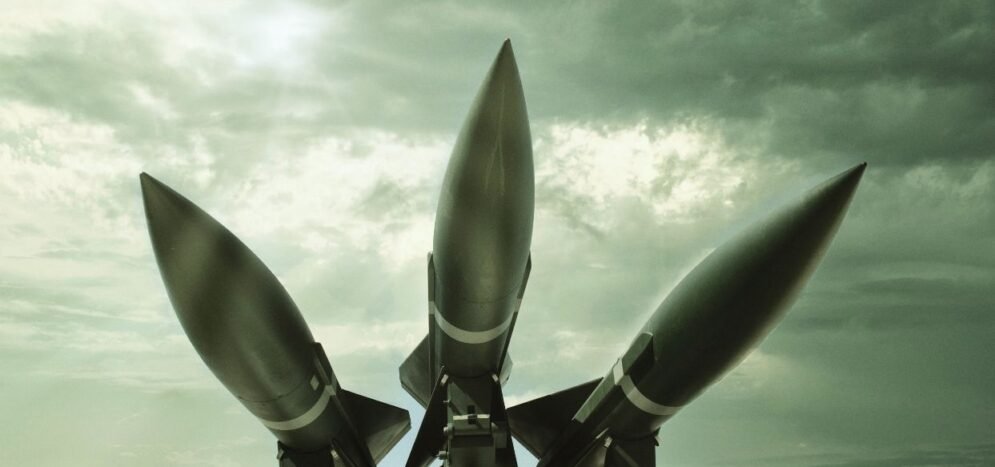
Cruise missiles represent a cornerstone of modern precision strike capabilities in defense arsenals worldwide. These self-propelled, low-altitude weapons blend advanced guidance with aerodynamic efficiency to evade defenses, delivering payloads with pinpoint accuracy across vast distances. Consequently, their evolution continues to reshape strategic deterrence and tactical operations.
Core Technologies Powering Cruise Missiles
At the heart of these systems lies air-breathing propulsion, typically turbofan or turbojet engines optimized for sustained subsonic or supersonic flight. To maintain a low profile, compact designs incorporate stealth shaping, radar-absorbent coatings, and low-observable materials to minimize infrared and radar signatures. Furthermore, wing configurations often unfold post-launch for efficient cruise, folding back for canister storage during transport.
Complementing the propulsion system, guidance suites fuse inertial navigation, GPS augmentation, and terrain-reference matching for all-weather autonomy. Digital scene-matching area correlator (DSMAC) systems compare onboard imagery against preloaded maps, enabling terrain-hugging profiles. In addition, anti-jam receivers and fiber-optic gyros ensure resilience against electronic warfare.
Regarding the business end of the weapon, warheads range from unitary high-explosive to submunitions, with insensitive munitions designs resisting accidental detonation. To ensure versatility, launch platforms span submarines, surface ships, aircraft, and ground vehicles, with universal vertical launch systems (VLS) standardizing integration across different branches.
Guidance and Navigation Systems
Diving deeper into the electronics, inertial measurement units provide initial drift-free navigation, which is then corrected by satellite links or Doppler velocity sensors. During the flight’s most critical phases, terrain contour matching (TERCOM) radars scan ground profiles during low-level ingress, adjusting altitude dynamically. As a result, digital elevation maps enable contour-following to mask acoustic and visual cues from the enemy.
In the terminal phase, electro-optical seekers activate to home in on contrast or laser designation for hardened targets. Meanwhile, network-centric variants receive mid-course updates via satellite datalinks, allowing for retargeting against mobile threats. Ultimately, autonomous collision avoidance integrates with obstacle databases to facilitate complex urban strikes.
Propulsion and Airframe Innovations
On the mechanical side, turbofan engines deliver fuel-efficient loiter with throttleable thrust for pop-up maneuvers. Alternatively, ramjet variants accelerate to supersonic dashes to overwhelm terminal defenses. To initiate flight, solid-fuel boosters ignite for rapid launch, jettisoning post-burnout to optimize cruise efficiency.
Structurally, composite airframes employ carbon fiber skins over titanium spars, balancing strength against weight. Moreover, variable-geometry wings adapt camber for efficiency across different flight regimes, while pop-out control surfaces enhance agility without significant drag penalties.
Key Applications in Military Operations
Land Attack Missions
Primarily, cruise missiles are used to saturate air defenses, clearing paths for follow-on strikes. Stand-off launches preserve platforms from counterfire, targeting command centers, bridges, and logistics nodes. Similarly, maritime forces employ ship-launched variants for coastal suppression.
Anti-Ship Roles
In maritime theaters, sea-skimming profiles exploit radar horizons, with active radar seekers locking onto surface combatants. Notably, wake-homing technology follows propeller turbulence for stern intercepts, while networked salvos coordinate arrivals from multiple bearings to confuse defenses.
Strategic Deterrence
Beyond tactical use, submarine-launched systems provide second-strike assurance from hidden bastions. Looking forward, air-breathing hypersonic variants compress response times, challenging even the most advanced ballistic missile defenses. However, the emergence of dual-capable weapons continues to blur the lines between conventional and nuclear thresholds.
Major Players and Global Landscape
In the global market, Raytheon leads with Tomahawk evolutions, integrating multi-mode seekers for littoral dominance. Across the Atlantic, MBDA’s Storm Shadow/SCALP family excels in deep-strike penetration. Meanwhile, Russia’s Kalibr series spans a wide spectrum from subsonic cruise to hypersonic configurations.
Regionally, India’s Nirbhik advances indigenous capabilities, while the BrahMos supersonic tandem offers Mach-plus terminal sprints. Simultaneously, China’s CJ/YJ families have proliferated across all People’s Liberation Army branches. Not to be outdone, Lockheed Martin continues to refine the JASSM-ER for extended reach and stealth.
As a result of globalization, collaborations often fuse Western seekers with regional airframes, while Eastern blocs standardize Kalibr derivatives for export. Underpinning this growth, tiered suppliers provide the essential engines, composites, and avionics to prime integrators.
Emerging Trends Transforming Capabilities
The next frontier involves hypersonic cruise missiles that sustain speeds of Mach 5+ via scramjet propulsion, maneuvering at altitudes that defy standard intercepts. Equally significant, AI-driven seekers now enable target discrimination amid complex decoys. Furthermore, swarm tactics are being developed to overwhelm defenses through coordinated salvos from low-cost “attritable” munitions.
Innovative engineering has also led to reusable first-stage boosters for air-launched hypersonics. In the realm of sensors, quantum sensors promise navigation in GPS-denied environments, while modular payloads allow engineers to swap warheads or electronic attack modules mid-design. Finally, directed energy warheads are exploring non-kinetic effects to disable electronics without physical destruction.
Operational Challenges and Countermeasures
Despite these advances, electronic warfare suites can jam seekers and spoof GPS, demanding frequency-agile receivers. Additionally, low-altitude flight carries the risk of terrain collisions, which must be countered by synthetic aperture radar mapping. On the defensive side, terminal systems like Close-In Weapon Systems (CIWS) are designed specifically to shred incoming salvos.
Furthermore, proliferation fuels regional arms races, with export controls heavily shaping technology flows. Logistically, sustainment remains a hurdle, demanding specialized fuels and pit storage. Ethically, significant debates still surround the use of autonomous target selection. To counter these threats, nations are evolving directed energy lasers and kinetic interceptors within layered defense frameworks.
Supply Chain and Strategic Implications
From a manufacturing standpoint, precision components like turbine blades and gyros rely on specialized alloys and cleanroom assembly. In fact, composite layup demands autoclave curing for flaw-free skins, while guidance integration requires vibration-isolated bays. To mitigate risk, regional hubs have emerged—particularly in India—to localize seeker production through offsets.
Ultimately, cruise missiles shift firepower from vulnerable airbases to distributed launchers, significantly enhancing survivability. Because of their precision, they reduce collateral damage, supporting sensitive urban operations. In conclusion, these systems redefine precision warfare; from subsonic stealth to the hypersonic blitz, they remain the anchor of modern strike complexes.