

The Quiet Revolution in Air Power
During the Cold War, the AESA Radars race focused on size. Engineers built larger dishes and powerful magnets. These mechanical parts spun noisily behind the nose cone. Then, everything changed. The future arrived with thousands of tiny transmit-receive modules.
These are Active Electronically Scanned Array (AESA) radars. They did not just improve performance. In fact, they fundamentally changed air combat. Today, the AESA market is growing rapidly. It is a strategic sector in defense electronics. Consequently, this technology is reshaping air forces, naval fleets, and ground defenses worldwide.
From Mechanical Scanning to Electronic Agility
Traditional radars scan the sky physically. They move a reflector or antenna back and forth. They are reliable, but they have significant flaws. For example, their movement reveals their location to enemies. They also take precious seconds to switch targets. Furthermore, if the motor breaks, the entire system fails.
AESA replaces these moving parts. Instead, it uses a flat panel filled with thousands of modules. Crucially, each module works independently. It can transmit, receive, and steer its own beam in microseconds.
As a result, the radar can look in multiple directions at once. It can change frequency instantly to avoid jamming. It can even track dozens of targets while guiding missiles. Additionally, reliability improves dramatically. The time between failures jumps from hundreds of hours to tens of thousands.
The Platforms Driving Change
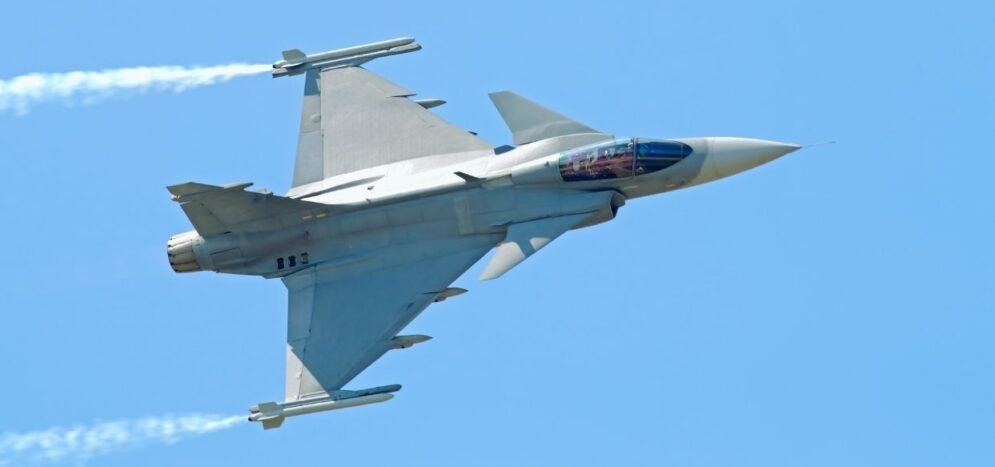
The United States led this technological charge. The F-22 Raptor used the first operational AESA radar in the early 2000s. Later, the F-35 integrated the radar directly into the aircraft’s skin. This improved stealth and data sharing. Therefore, AESA became a necessity for survival against peer adversaries.
Europe followed quickly with the Typhoon and Rafale fighters. Russia and China also accelerated their programs. For instance, China developed multiple AESA types for its J-20 and J-16 jets in just over a decade. Now, even smaller nations like South Korea consider AESA essential for any new fighter program.
Moreover, the technology is expanding. It has migrated to helicopters, bombers, and naval destroyers. It is also vital for ground-based systems where mobility is key.
Gallium Nitride: A Material Revolution
Early AESA radars used gallium arsenide modules. These were revolutionary but fragile and power-hungry. However, a second revolution began around 2015. Manufacturers shifted to gallium nitride (GaN).
GaN modules are superior. They handle higher voltages and run cooler. Significantly, they deliver roughly five times the power density. This leads to longer detection ranges. It also allows engineers to pack more capability into smaller arrays. This is critical for drones and missiles. Currently, mastering GaN production provides a major technological advantage.
The Market Beneath the Radar
Exact sales figures remain classified. Nevertheless, estimates place the global AESA market in the tens of billions annually. It is expected to grow at double-digit rates through the next decade.
Several factors drive this growth:
- Aging Fleets: Cold War-era jets need upgrades.
- New Programs: Countries like India and Turkey are launching new fighter programs.
- Naval Defense: Ships need AESA to stop hypersonic attacks.
Export rules still limit the sale of top-tier systems. However, trusted partners can buy second-tier designs. Israel and Japan are active sellers in this market. Even China offers options to countries that cannot access Western technology.
New Frontiers and Geopolitics
Innovation continues to move forward. New “conformal” arrays hug the curve of the aircraft. This eliminates the need for a nose cone and improves stealth. Additionally, future radars will be multifunction. They will handle radar, electronic warfare, and communications simultaneously.
AI is also joining the fight. Cognitive radars are moving from labs to flight tests. These systems learn jamming patterns and predict enemy tactics automatically.
Finally, control over this technology is a geopolitical issue. Nations worry about relying on imports. Thus, countries like India and South Korea are building their own domestic industries. However, the supply chain for chips remains concentrated. Disruption in a few key regions could halt defense programs globally.
The Horizon
In the next decade, virtually every new combat system will carry AESA radar. The technology has become the global standard. Yet, a gap remains. The difference between a top-tier GaN system and an older export model is vast. In modern combat, the first to detect a target usually wins. Ultimately, the AESA market is not just about hardware. It determines who rules the sky.