
🛡️ Navigating the Shadows: The Weapon Locating Radar Market
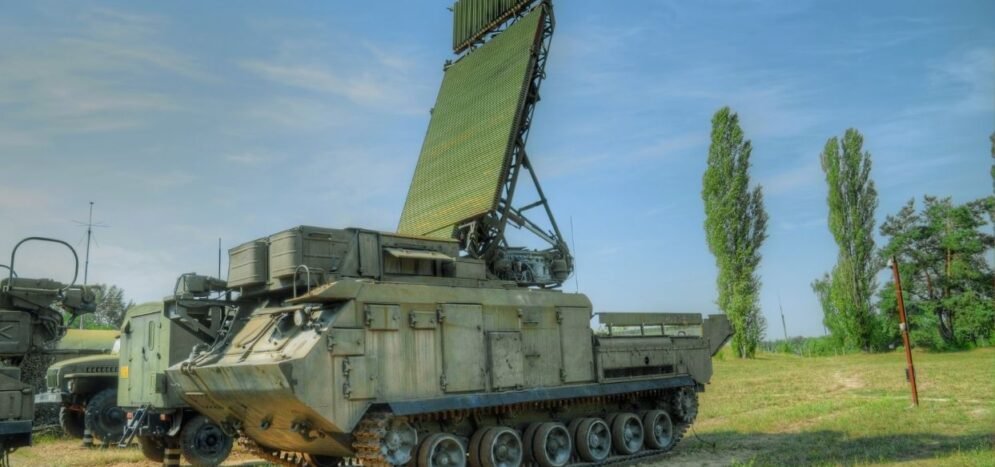
The Weapon locating radar are like silent guards that watch for these threats. These complex systems find incoming artillery shells, rockets, and mortars with great accuracy. Specifically, they trace the path of the projectile back to its launch point. This allows for quick defensive action, turning a possible attack into a planned response. Special artillery units once used this technology. However, it now plays a key part in defense plans worldwide, showing a big change in how countries protect their forces and lands.
The Core Role: Counter-Battery Action
The main job of weapon locating radars is counter-battery work. In war zones, it’s vital to know who is a friend and who is an enemy amid the confusion. Therefore, these radars use smart signal processing to remove background noise and find the faint signs of projectiles moving through the air.
Today, ground-based models are the most common because they can move easily for deployment at the front lines. Furthermore, manufacturers are also adding this technology to ships and aircraft to increase their range. The history of this tech goes back to the Cold War. But now, the latest versions mix older, dependable designs with new electronics. As a result, they can handle new threats like groups of drones or very fast, hypersonic weapons.
📈 Market Momentum: Geopolitical Drivers
World events are pushing this market forward. For instance, rising border conflicts and wars with uneven forces highlight the urgent need for real-time threat detection. Nations are spending a lot on modernizing their defense systems. They see these radars as tools that make their forces stronger and safer without needing more troops.
Moreover, the move toward networked warfare makes these radars even more valuable. They connect them to command centers, where they send data for automated firing solutions. This cuts response times from minutes to mere seconds. Consequently, this connection changes single detections into a coordinated defense, where the data from one radar helps the entire battlefield.
🚀 Technology Leaps and Miniaturization
Technology is rapidly advancing the field. For example, Active Electronically Scanned Arrays (AESA) are replacing older mechanical antennas. This allows the radar beam to be steered electronically to track multiple targets at the same time. In addition, components made of Gallium Nitride (GaN) make the systems more power-efficient. This increases the detection range while lowering the heat signature that could give away their location.
Furthermore, Artificial Intelligence (AI) now works with the data streams. It helps find patterns in busy environments, such as telling the difference between a civilian firework and an incoming rocket. Also, machine learning programs improve accuracy over time by learning from every engagement to predict how a target might try to escape. These new ideas not only boost performance but also make the systems smaller. Thus, soldiers can quickly deploy them in portable units.
🌱 The Unexpected Thread: Sustainability
Sustainability is becoming a factor in this high-stakes field. Defense buyers now look for designs that are easy to maintain and have parts that can be swapped out easily. This simplifies logistics in remote areas. Likewise, energy-efficient radars use less fuel, which fits with military efforts to be more environmentally friendly. Finally, using recyclable materials in the casings and needing fewer rare-earth minerals helps secure the supply chain. This focus on the environment is driven by the desire for long-term cost savings, making the market both tactically necessary and strategically smart.
🚧 Challenges and Lingering Shadows
However, challenges still exist. First, the high cost of research and development makes it hard for smaller companies to enter the market. This leaves large, established companies controlling the field. Second, combining these new radars with older systems can be complex, often requiring custom software that strains budgets.
In addition, cyber security poses a major risk. As radars become digital, sophisticated hacks can easily target them to spoof signals or blind the sensors. Furthermore, there are ethical questions. In cities, telling the difference between a fighter and a civilian depends on the radar being perfect, and mistakes can have severe humanitarian results. Moreover, rules about export controls and spectrum use complicate global deployments, trying to balance new technology with international agreements.
🌍 Versatility Beyond Combat
The technology has many uses outside of fighting, showing its flexibility. Specifically, in peacekeeping, these radars monitor ceasefires and pinpoint rule-breaking to help calm tensions. Similarly, border patrols use them to detect people trying to sneak across, mixing weapon location with ground surveillance. Disaster relief teams use adapted versions to find avalanche debris or seismic activity. Even more broadly, navies use their integrations in maritime areas to counter shore-based threats. This wide adaptability increases the market’s appeal to non-traditional buyers like coast guards and humanitarian groups.
🤝 A Collaborative Ecosystem
Collaboration is key to this market. Main contractors work with small, specialized companies for sensors. Meanwhile, universities provide new breakthroughs in waveform design. International groups pool resources for joint programs, which reduces the financial load on any single country. Clearly, supply chains cross continents, with electronics from Asia, assembly in Europe, and testing in North America. These partnerships speed up development, ensuring systems keep pace with new threats.
🔭 The Future Horizon
Looking ahead, the future holds both opportunities and risks. For instance, quantum sensing could break current detection limits, finding stealthy projectiles that normal waves miss. Alternatively, swarm intelligence might coordinate groups of radars to create constant surveillance over huge areas. Defenses against hypersonic weapons will require ultra-fast processors, pushing materials science to its limits. Nevertheless, the risk of an arms race is real, where advanced locating tech falls into adversarial hands, possibly worsening conflicts. Balancing being prepared with diplomacy remains the hardest challenge.
In this hidden world, weapon locating radars represent vigilance—tools that not only find threats but also free forces from fear. They hint at the possibility of peace through strength, where every detected arc avoids a hidden tragedy. As battlefields become a mix of digital and physical elements, these systems stand firm, guarding the fragile line between order and chaos. The market, in its steady rise, shows a path where technology calms conflict, one precise signal at a time.